Live from Wealth Expo Colombia 2026: WikiFX Strengthens Growing Partnerships Across LATAM
简体中文
繁體中文
English
Pусский
日本語
ภาษาไทย
Tiếng Việt
Bahasa Indonesia
Español
हिन्दी
Filippiiniläinen
Français
Deutsch
Português
Türkçe
한국어
العربية
اردو
Abstract:A point-in-percentage, or pip, is a standardized unit used to quantify tiny changes in currency pair pricing. Even modest market swings may offer potentially profitable trade settings as well as possible losses. Therefore, the tiny pip increment guarantees that constant trading chances are accessible. Furthermore, the pip dramatically improves order accuracy and spread specificity. All of our platforms automatically count pips to calculate the profit or loss of your transaction.
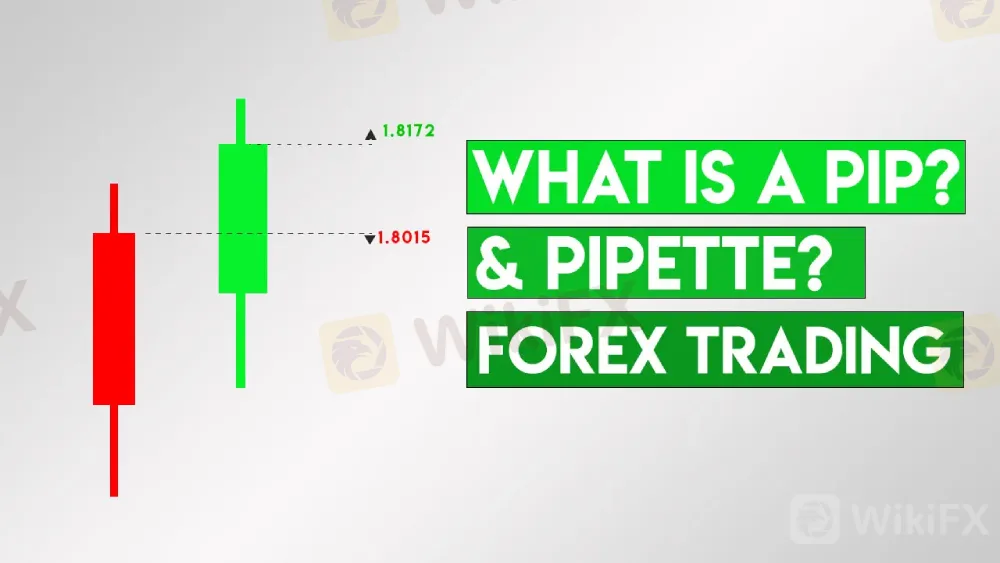
Currency values are generally reported in pips or percentages in points since they vary in such small increments. A pip is often defined as the fourth decimal point of a price, which is equivalent to 1/100th of one percent.
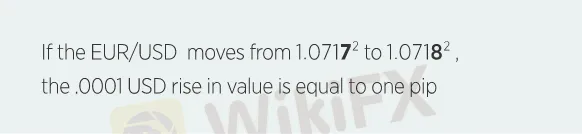
Pips in Fractions
The fractional pip, which is 1/10th of a pip, is represented by the superscript number at the end of each price. The fractional pip indicates price fluctuations much more precisely.
Pips in Action
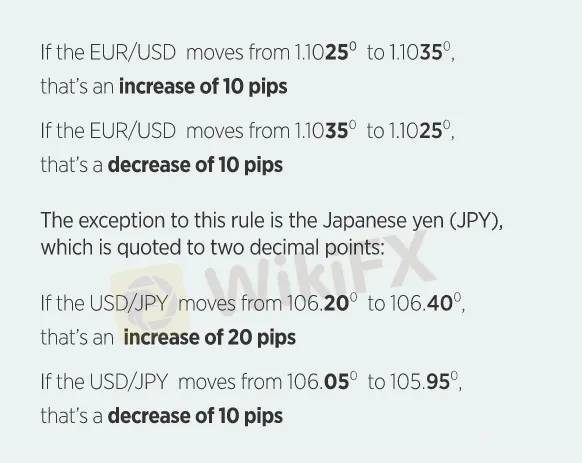
Determining the worth of a pip
A pip's value fluctuates depending on the currency pairings you trade as well as which currency is the base currency and which currency is the counter currency.
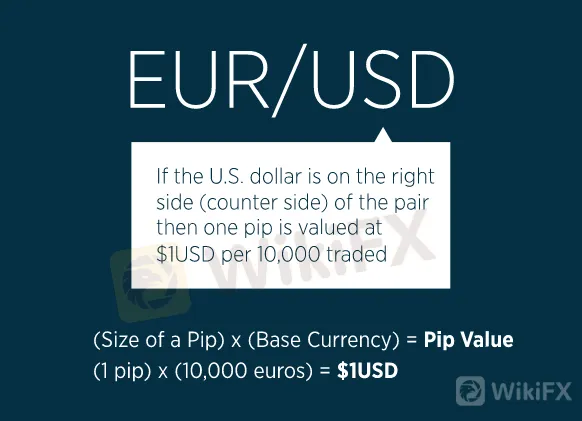
Using the same example, you purchase 10,000 euros at 1.10550 versus the US dollar (EUR/USD) and earn $1 for every pip rise in your favor. You would profit $10 if you sold at 1.10650 (a 10-pip gain).
If all of the above conditions were met, but you sold at 1.10450 (a ten-pip drop), you would lose $10.
Consider the USD/JPY pair, in which the US dollar serves as the base currency.
The USD/JPY exchange rate determines the value of one pip in this situation.
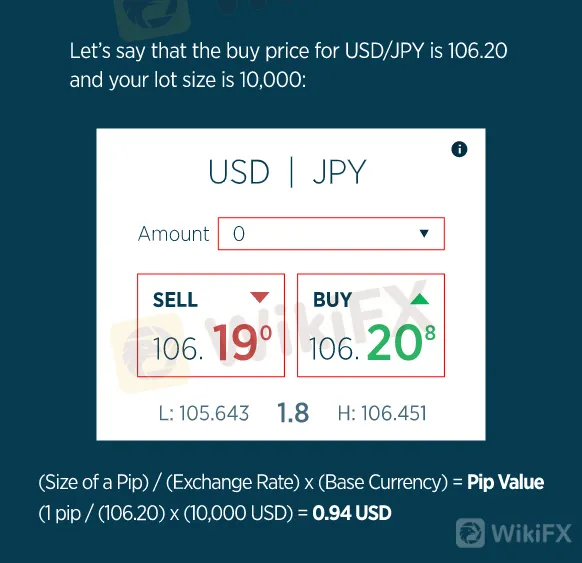
So, using the same example, you purchase 10,000 US dollars at 106.20 yen and make $0.94 for every pip rise in your favor. You would profit $18.80 if you sold at 106.40 (a 20-pip gain).
If the aforementioned conditions were the same but you sold at 106.00 (a 20-pip decline), you would lose $18.80.
More WikiFX educational articles may be found at the following address: https://www.wikifx.com/en/education/education.html.


Disclaimer:
The views in this article only represent the author's personal views, and do not constitute investment advice on this platform. This platform does not guarantee the accuracy, completeness and timeliness of the information in the article, and will not be liable for any loss caused by the use of or reliance on the information in the article.

Live from Wealth Expo Colombia 2026: WikiFX Strengthens Growing Partnerships Across LATAM

Live from Wealth Expo Colombia 2026: WikiFX Strengthens Growing Partnerships Across LATAM

XTB, a veteran with over 15 years of experience in the competitive brokerage industry, has reportedly been facing severe user allegations concerning a tedious KYC verification process and blocked withdrawals despite numerous requests by traders globally. Traders worldwide, including those from the United States and the United Kingdom, have objected to the broker’s operational methodology in 2026. If you are one of them, this XTB review is worth reading! In this article, we have examined several user allegations to understand their concerns. Additionally, we have shared our analysis on the XTB regulation status. The holistic approach adopted by us will likely help you make an informed brokerage decision.

Globinok, a Comoros-based new-age trading enterprise, is receiving bad reviews from users across India, in particular. These users have accused the brokerage firm of failing to deliver on their trading promise. This included failing to ensure the AI-based trading experience promised by them. The sudden disappearance of the account manager has been another key complaint highlighted by users. In this Globinok review article, we have shared user reviews and a regulatory overview of the broker.