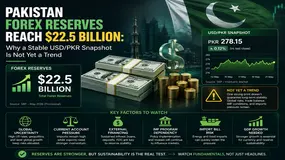
Abstract:A global decentralized or over-the-counter market for trading currencies is known as the foreign exchange market. For every currency, exchange rates are set by this market. It covers all facets of purchasing, selling, and exchanging currencies at established or current rates.

A global decentralized or over-the-counter market for trading currencies is known as the foreign exchange market. For every currency, exchange rates are set by this market. It covers all facets of purchasing, selling, and exchanging currencies at established or current rates.
According to the Manufacturers Association of Nigeria (MAN), among other things, low forex availability and rising production costs are the main causes of inflation in the nation. High import costs are also a result of the Naira's depreciation.
According to Mr. Segun Ajayi-Kadir, Director General of MAN, revamping the naira and dealing in the currency outside banks (CoB) may not have the impact on inflation that the Central Bank of Nigeria had hoped for (CBN).
He mentioned that the National Bureau of Statistics (NBS) ascribed the jump in headline inflation in January to disruptions in the supply of food items, increases in import costs due to the depreciation of the Naira, and a pervasive increase in the cost of manufacturing.
“This is contrary to the expectation of CBN that the currency redesign will help to tame inflation by bringing the hoarded currency into the banking system and giving CBN the opportunity to establish effective management of the monetary policy,” he said. It is clear at this point that altering the currency and bringing in money from outside the banking system may not significantly reduce inflation.
The amount of actual money in circulation now only accounts for 6.8% of the overall amount of money used to support the country's economy. This means that the amount of money represented through instruments like deposits and bonds, for example, greatly outweighs the amount of actual money. Furthermore, since more than 20 years ago, 85% of our currency has been in circulation outside of banks.
Production and a variety of other well-known issues are what actually fuel inflation. You can clearly see how increased insecurity has hampered food production, leading to food inflation, in particular. High importation and a lack of foreign exchange are two more.
Therefore, in order to reduce food inflation, it is necessary to address the real issues that drive inflation by giving manufacturing a higher priority when allocating foreign exchange, expanding and deepening special funding windows for the real sector, and resolutely tackling the problem of insecurity.
Among other goals of the CBN, the currency redesign aims to control inflation, which has recently taken on a worrying dimension. The CBN report, which claimed that 70% of CoB had been sucked in, should be commended for the success of the apex bank's cashless strategy. But when it comes to inflation, a different scenario is taking place.
It's possible that we're still in the early stages of the assessment process and will need to wait a bit before we fully understand the ramifications or results of the policy. This is especially true now that the currency change has been implemented slowly and caused unneeded disturbance to people's daily lives and companies. Already, we are observing a decline of more than 25% in sales of goods produced locally.