


UK Retail Sales July 2026 Fall 0.5%: What the Result Means for GBP
UK retail sales fell 0.5% in July 2026, while the three-month measure rose 1.1%. See the ONS details and what the mixed result may mean for GBP.
Original

简体中文
繁體中文
English
Pусский
日本語
ภาษาไทย
Tiếng Việt
Bahasa Indonesia
Español
हिन्दी
Filippiiniläinen
Français
Deutsch
Português
Türkçe
한국어
العربية
اردو




Abstract:ASIC has canceled the Australian financial services (AFS) license held by FTX Australia Pty Ltd (FTX Australia), effective from 14 July 2023. This decision comes after a series of developments involving the company.


ASIC has canceled the Australian financial services (AFS) license held by FTX Australia Pty Ltd (FTX Australia), effective from 14 July 2023. This decision comes after a series of developments involving the company.
As part of the cancellation terms, FTX Australia will be allowed to provide limited financial services related to the termination of existing derivatives with its clients until 12th July 2024. Despite the license revocation, the company is still required to maintain its membership with the Australian Financial Complaints Authority and uphold arrangements for compensating retail clients.
The regulatory actions against FTX Australia began on 11th November 2022 when John Mouawad, Scott Langdon, and Rahul Goyal of KordaMentha were appointed as voluntary administrators for FTX Australia and its subsidiary, FTX Express Pty Ltd. It is important to note that FTX Express Pty Ltd operates a digital currency exchange that remains unregulated by ASIC.
Subsequently, on 14th November 2022, ASIC suspended FTX Australia's AFS license initially until 15th May 2023. However, this suspension was extended to 24th July 2023, leading to the ultimate cancellation of the AFS license on 14th July 2023.
As the situation unfolds, market participants and clients are closely monitoring the developments surrounding FTX Australia. The cancellation of its AFS license raises questions about the company's future operations and compliance with regulatory standards within the Australian financial services sector.

Disclaimer:
The views in this article only represent the author's personal views, and do not constitute investment advice on this platform. This platform does not guarantee the accuracy, completeness and timeliness of the information in the article, and will not be liable for any loss caused by the use of or reliance on the information in the article.
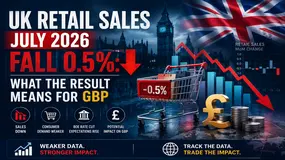
UK retail sales fell 0.5% in July 2026, while the three-month measure rose 1.1%. See the ONS details and what the mixed result may mean for GBP.
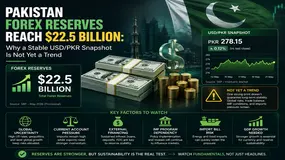
Pakistan forex reserves stood at $22.506 billion on 13 August 2026, while the SBP dashboard showed a USD/PKR mark to market rate of 277.5713 on 20 August. This article separates the SBP forex reserves facts from predictions about the Pakistan rupee and the forex market Pakistan.
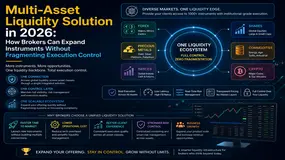
A multi-asset liquidity solution can help a broker support FX, CFDs, commodities, and indices through a more unified operating model. But adding asset classes can also create fragmented symbols, pricing, routing, margin rules, records, and client messages if controls are not designed first. This 2026 guide explains how a multi asset liquidity provider, forex CFD liquidity setup, commodity liquidity provider, and indices liquidity provider fit into a broker-owned execution service. It outlines the due-diligence questions, shared-control model, cost drivers, and 90-day implementation plan that help teams expand without making the execution chain harder to explain. The aim is not to promise deeper liquidity or better trading outcomes. It is to create evidence that a broker can supervise market access, trace order events, reconcile costs, and communicate consistently to the relevant clients when conditions are difficult.

Gold surged above $4,500 after the US Treasury expanded its purchases of longer-dated government bonds, pushing yields and the dollar lower. But this was not debt forgiveness or Federal Reserve money printing—it was a liquidity operation that exposed a much bigger fear: America may be finding it increasingly difficult to live with market-driven interest rates.
WikiFXWikiFXWikiFXWikiFXWikiFXWikiFXWikiFXWikiFXWikiFXWikiFX