Abstract:Buffett once said that if business school students, after graduating, were given a card with a punch hole for each stock they buy, they would likely be wealthy if they had the fewest punched holes throughout their lives.
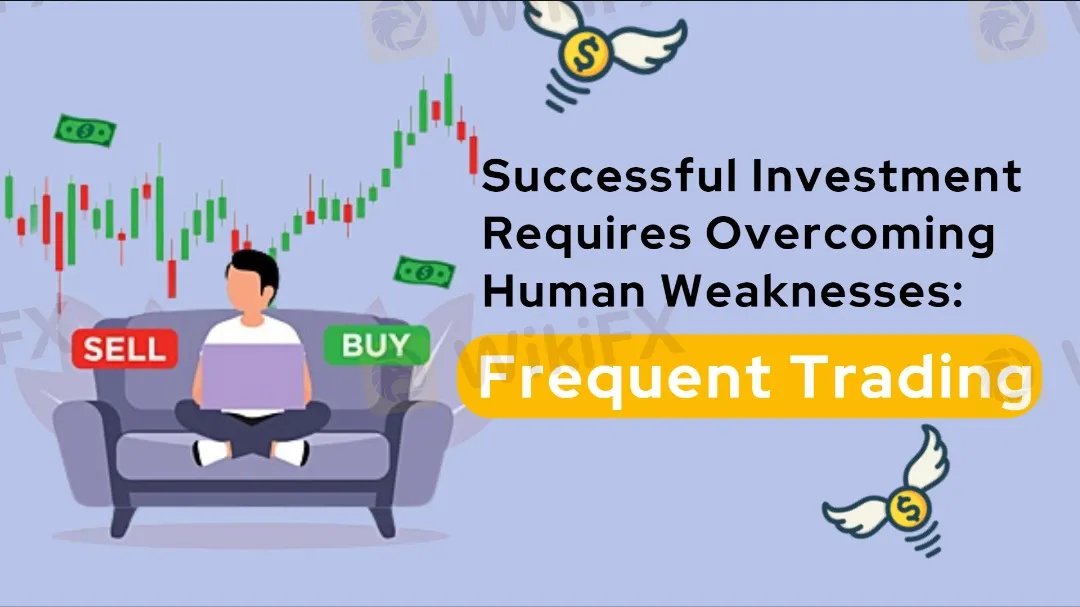
Buffett once said, “If business school students, after graduating, were given a card with a punch hole for each stock they buy, they would likely be wealthy if they had the fewest punched holes throughout their lives.”
“Money goes from the active to the patient. Many energetic and aggressive investors see their wealth gradually disappear.”
From my own trading records, it can be observed that the months with the highest profits often have the fewest number of trades. Conversely, months with losses are often accompanied by frequent trading.
The reason for this situation is that, in trend trading, it is crucial to cut losses and let profits run. During losing periods, timely stop-losses are necessary, leading to shorter holding times and a higher frequency of trades. Conversely, during profitable periods, holding positions for an extended period results in a reduction in the number of trades.
Whether it's the teachings of investment gurus or lessons learned through personal experience, the importance of reducing trade frequency is evident. Frequent trading not only leads to confusion and wandering but also fails to avoid the bullets of losses. Additionally, it incurs significant costs in terms of transaction taxes and fees, hopping from one pitfall to another.

From this, can we start by limiting ourselves. For instance, restricting the maximum number of trades to three per month initially, gradually reducing it over time. Eventually, making infrequent or no trading a habit.
The key to successful trading is not solely reliant on technical skills but also depends on your mindset. Avoiding chasing market tops and bottoms, minimizing the frequency of trades—these are the fundamental qualities a successful investor must possess.
The capacity of a bucket to hold water is not determined by the number of long wooden planks it has but by the shortest one. If the majority of the planks forming the bucket are long, except for one short plank, the water will flow out from the short plank. This is the traditional “bucket theory” or “short board effect.”
In the market, the “long planks” correspond to an investor's strengths or advantages, while the “short plank” represents a person's weaknesses or shortcomings. Generally, investors have certain investment skills—some excel in fundamental analysis, others in technical analysis. However, why do investment mistakes frequently occur? The reason is that the ultimate return on investment often depends not on the aspects investors are proficient in but rather on the aspects they are least skilled in.

Among all the “boards,” the shortest yet most crucial one is the inherent human weaknesses that investors possess. These weaknesses include impatience, greed, fear, impulsiveness, loss aversion, herd mentality, envy, and restlessness, among others. In short, the tendency to be stuck in a cycle, leading to a perpetual state of self-loss.
It can be said that as long as you are a psychologically normal investor, these human weaknesses will undoubtedly manifest to some extent in you. However, in investing, these weaknesses are precisely the “short board,” often proving to be fatal. A successful investment journey is the continual process of overcoming the “short board effect.”
But, actions speak louder than words, and the gap between knowing and doing is the farthest distance in the world. Without experiencing a complete bull-bear cycle, without accumulating monetary losses, you won't truly understand, making it challenging to mature. Once you know and can act, and it becomes a habit, you'll discover that successful investing is both simple and joyful.