


IG Review for India 2026: RBI Alert List, Regulation, Login, and Forex Risk
IG review for India in 2026: see the RBI Alert List entry, overseas regulation, login checks, forex limits, and a clear broker safety checklist.
Original

简体中文
繁體中文
English
Pусский
日本語
ภาษาไทย
Tiếng Việt
Bahasa Indonesia
Español
हिन्दी
Filippiiniläinen
Français
Deutsch
Português
Türkçe
한국어
العربية
اردو




Abstract:Federal agencies propose risk-sensitive executive pay plans to prevent excessive risk-taking.
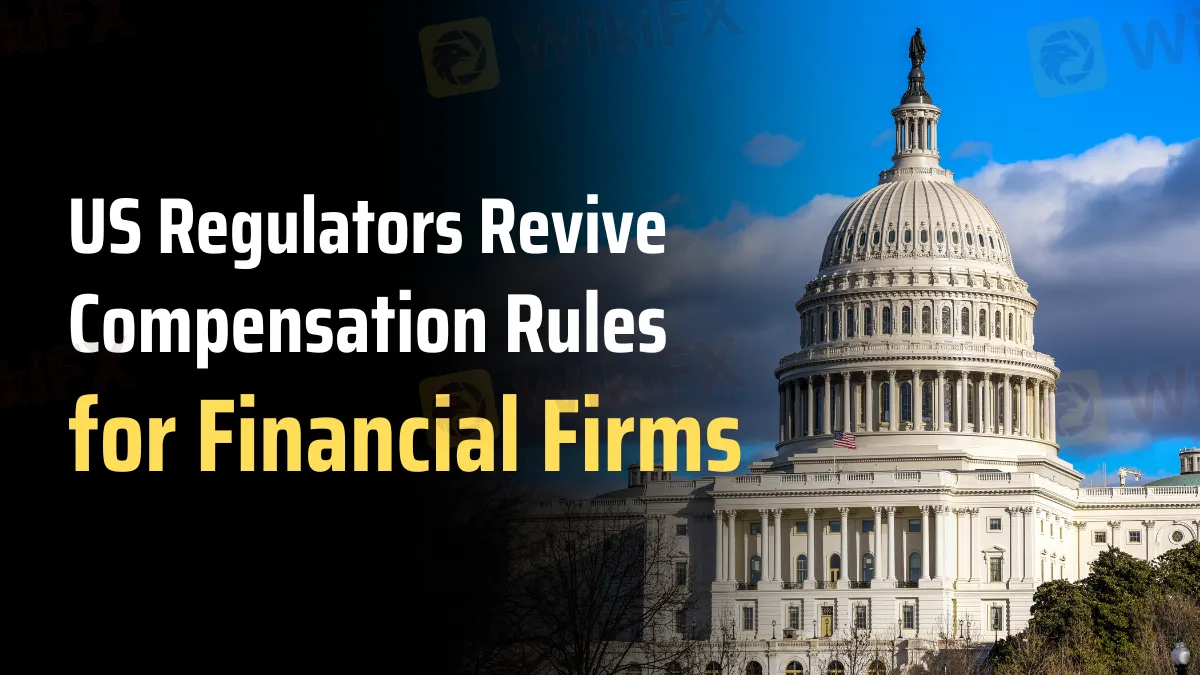
Significantly, US bank authorities have rekindled attempts to put into effect long-delayed compensation regulations meant to increase the risk sensitivity of CEO pay schemes in financial companies. The regulation, proposed jointly by the Federal Deposit Insurance Corporation (FDIC), the Office of the Comptroller of the Currency (OCC), and the Federal Housing Finance Agency (FHFA), would outlaw incentive-based systems that do not consider risks or permit pay forfeitures and clawbacks. This repeated attempt is part of a larger effort to improve financial stability and stop CEOs of financial institutions from taking on too much risk. It follows a 2016 plan.
FDIC Chairman Martin Gruenberg emphasized the need to address unfair pay practices, particularly in large financial institutions. Such behaviors, he said, may have a huge influence on the whole financial system. The bankruptcy of Silicon Valley Bank the previous year brought to light the need for strong compensation regulations to reduce risk.
Industry players have criticized the plan, however. The new regulations would apply to banks with assets over $1 billion, with the harshest restrictions imposed on those with holdings exceeding $250 billion. Representing bigger banks, the Bank Policy Institute wrote down the proposal as “purely political.”
Because the FDIC, OCC, FHFA, National Credit Union Administration, Securities and Exchange Commission, and Federal Reserve all need to agree, putting these regulations into practice has been difficult. While the NCUA is anticipated to approve the idea shortly, the SEC has it on its calendar for rulemaking.
Jerome Powell, the Federal Reserve chairman, has not pledged to issue the rule this year. Powell wanted a strategy that effectively handled the risks involved with compensation and emphasized the need to understand the problem. The government delegate emphasized the need to consider existing industrial practices and reiterated the commitment to cooperate with other authorities.
Finalizing any new regulations requires public input. The agencies will keep getting comments on their websites as long as none of the regulators provide a coherent plan. The redoubled attention on compensation regulations highlights the continuous efforts to protect financial stability and encourage prudent risk management in the sector.

Disclaimer:
The views in this article only represent the author's personal views, and do not constitute investment advice on this platform. This platform does not guarantee the accuracy, completeness and timeliness of the information in the article, and will not be liable for any loss caused by the use of or reliance on the information in the article.
IG review for India in 2026: see the RBI Alert List entry, overseas regulation, login checks, forex limits, and a clear broker safety checklist.
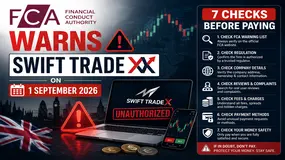
FCA warns Swift TradeX in a notice first published and updated on 1 September 2026. The UK Financial Conduct Authority says the firm may be providing or promoting financial services without permission, is not authorised, and may be targeting people in the UK. The notice names the website swifttradexai.com, a Worcester address and a UK telephone number, but also cautions that unauthorised businesses may use incorrect or borrowed contact details. The confirmed issue is authorisation status—not a court finding about every transaction. Anyone considering a payment should stop, verify the firm independently, and avoid using contact information supplied by the platform itself.
ThinkMarkets review for India: check the RBI Alert List, overseas entities, regulation, login security, forex rules, costs, withdrawals, and leverage risk.
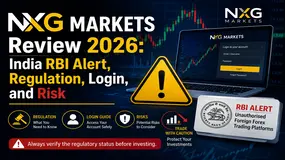
People searching NXG MARKETS regulation or regulation NXG MARKETS need to separate an overseas licence from permission in India. The Reserve Bank of India Alert List, updated 19 November 2025, names NXG Markets and nxgmarkets.com. RBI says listed entities are neither authorised to deal in forex under FEMA nor authorised to run an approved forex electronic trading platform. The broker's own site also says it does not serve residents or citizens of India. This NXG MARKETS review found an overseas Mwali licence record, but no RBI authorisation. No cited court ruling proves fraud. For an Indian user, the local warning and service restriction should control the decision.
WikiFXWikiFXWikiFXWikiFXWikiFXWikiFXWikiFXWikiFXWikiFXWikiFX