Abstract:While many traders enter the market with dreams of financial freedom and substantial profits, they often find themselves facing significant losses instead. A common, yet under-discussed, factor behind these losses is self-sabotage.

In the high-stakes world of online trading, success often hinges not just on market knowledge and technical skills, but also on the psychological resilience and discipline of the trader. While many traders enter the market with dreams of financial freedom and substantial profits, they often find themselves facing significant losses instead. A common, yet under-discussed, factor behind these losses is self-sabotage. Understanding the ways traders undermine their own success is crucial for anyone looking to navigate the markets successfully.

Emotions are the arch-enemy of rational trading. Fear and greed are the most common culprits. Fear can paralyze a trader, preventing them from executing well-planned trades, or it can force them to close positions prematurely, missing out on potential profits. On the other hand, greed can push traders to hold onto winning trades for too long, waiting for that extra pip that never comes, or to over-leverage their positions in the hope of outsized gains. This emotional rollercoaster often leads to poor decision-making and significant losses.

A surprising number of traders dive into the markets without a well-thought-out trading plan. A trading plan outlines the strategy, risk management rules, and goals of the trader. Without it, trades are often executed based on whims or gut feelings rather than sound analysis. This haphazard approach almost always ends in disaster. A solid trading plan is a traders roadmap, helping to maintain discipline and consistency, two key components of long-term success.

Overtrading is another common form of self-sabotage. Driven by the excitement of the market or the desire to recoup losses quickly, traders often execute too many trades. This not only increases transaction costs but also leads to less careful analysis and poorer trade quality. Overtrading can rapidly deplete a trading account, turning a promising trader into a frustrated one.
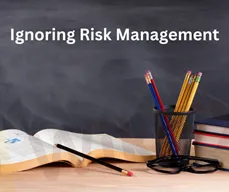
Risk management is often the first casualty of overconfidence. Traders may neglect to set stop-loss orders or may risk too much of their capital on a single trade. This lack of risk management can lead to catastrophic losses. Effective risk management involves setting stop-loss levels, diversifying trades, and never risking more than a small percentage of one‘s trading capital on any single trade. It’s the safety net that can keep traders afloat during rough market conditions.

The temptation to recover losses by increasing trade size or frequency is a classic self-sabotage move. This is often referred to as “revenge trading.” After a losing streak, the emotional toll can lead traders to make irrational decisions, hoping to quickly recover their losses. This usually results in even greater losses and a downward spiral that can be difficult to escape.

After a series of successful trades, traders can become overconfident, believing they have mastered the market. This overconfidence can lead to larger, riskier trades, and a disregard for market analysis and risk management. The market has a way of humbling even the most confident traders, and those who do not respect its volatility often pay a hefty price.

Markets are dynamic and constantly evolving. Strategies that work well in one market condition may fail miserably in another. Traders who are unwilling or unable to adapt their strategies in response to changing market conditions often find themselves on the losing end. Continuous learning and flexibility are essential traits for long-term success in trading.
In summary, self-sabotage in trading is a significant barrier to success, but it can be mitigated through awareness and disciplined practices. Emotional control, adherence to a trading plan, risk management, and the ability to adapt are crucial elements that distinguish successful traders from those who continually struggle. By recognizing and addressing these self-destructive behaviours, traders can improve their chances of achieving their financial goals and navigating the complex world of online trading with greater confidence and success.