Abstract:Italy's financial regulator, Consob, has raised alarms over an increase in fraudulent schemes targeting investors through mobile messaging platforms such as WhatsApp and Telegram.
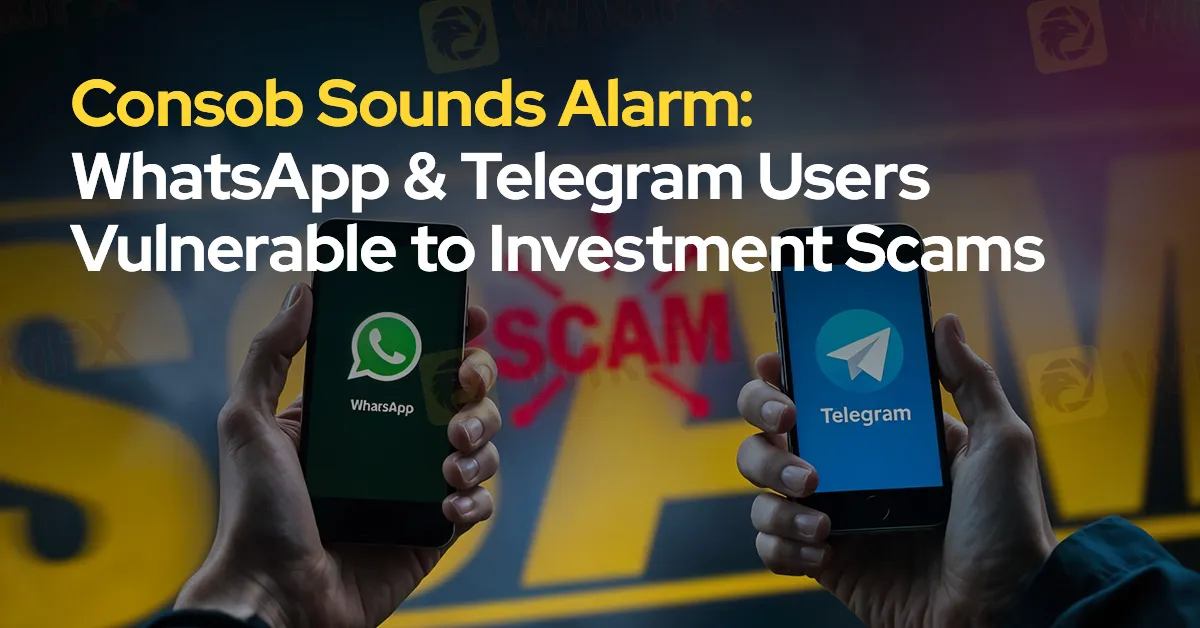
Italy's financial regulator, Consob, has raised alarms over an increase in fraudulent schemes targeting investors through mobile messaging platforms such as WhatsApp and Telegram. The scams, which often impersonate prestigious financial firms, aim to exploit the trust of unsuspecting retail investors by offering seemingly lucrative investment opportunities.
The regulator revealed that these schemes follow a recurring pattern: unauthorised operators promote illicit offers on the internet, often disguised as attractive and high-yield investments. To lend credibility to their schemes, scammers misuse the names of reputable institutions, promising to replicate the investment strategies of these well-known firms. The exploitation of prestigious brand names exemplifies the deceptive tactics employed to lure victims into financial traps.

This warning highlights the evolving nature of financial fraud, which has shifted significantly toward digital platforms. Messaging apps such as WhatsApp and Telegram have become the preferred channels for scammers due to their accessibility and the direct reach they offer to users. It was reported that these platforms are responsible for the highest percentage of financial losses, with scams on Telegram and WhatsApp affecting 60% of victims. Facebook, Instagram, and SMS also reported significant risks, with losses occurring in 56%, 51.8%, and 50% of cases, respectively. Platforms such as X (formerly Twitter) and LinkedIn posed slightly lower risks, with financial losses reported by 43.7% and 45.4% of users.
The study further revealed that new traders are particularly vulnerable to scams. Nearly 22% of novice traders expressed low confidence in their ability to identify fraudulent schemes, highlighting the critical need for educational initiatives to improve scam awareness. Experienced traders, by contrast, exhibited greater confidence in navigating such risks.
Discord, another platform gaining popularity among retail traders, has transformed into a virtual trading hub where users discuss market trends in real time. Initially designed for gamers, Discords seamless interface and overlap with gaming culture have made it a natural fit for traders seeking community-based interaction. The platform's appeal lies in its ease of use and its ability to replicate the camaraderie of online forums. However, its anonymity and private channels have also turned it into fertile ground for fraudulent activities, including pump-and-dump schemes and misinformation campaigns targeting inexperienced traders.
The lack of regulatory oversight on platforms like Discord further complicates the issue. Experts have expressed concerns that unregulated online communities allow for unchecked market manipulation and unethical behaviour. The anonymity offered by such platforms makes it challenging to trace fraudulent activities, leaving retail investors particularly exposed to risks.

As incidents like this become increasingly common, tools such as WikiFX can play a vital role in helping individuals verify the legitimacy of brokers and financial platforms. WikiFX offers an extensive database of global broker profiles, regulatory status updates, and user reviews, enabling users to make informed decisions before committing to any financial investment. Its risk ratings and alerts for unlicensed or suspicious entities help investors easily spot red flags and avoid potential scams. By using tools like WikiFX to research a broker's background, individuals can safeguard their hard-earned savings and reduce the risk of falling victim to fraudulent schemes.