


IG Review for India 2026: RBI Alert List, Regulation, Login, and Forex Risk
IG review for India in 2026: see the RBI Alert List entry, overseas regulation, login checks, forex limits, and a clear broker safety checklist.
Original

简体中文
繁體中文
English
Pусский
日本語
ภาษาไทย
Tiếng Việt
Bahasa Indonesia
Español
हिन्दी
Filippiiniläinen
Français
Deutsch
Português
Türkçe
한국어
العربية
اردو




Abstract:Carl Erik Rinsch, Hollywood director, was arrested for fraud, money laundering, and $11M Netflix scam. His crypto investments led to significant financial losses.
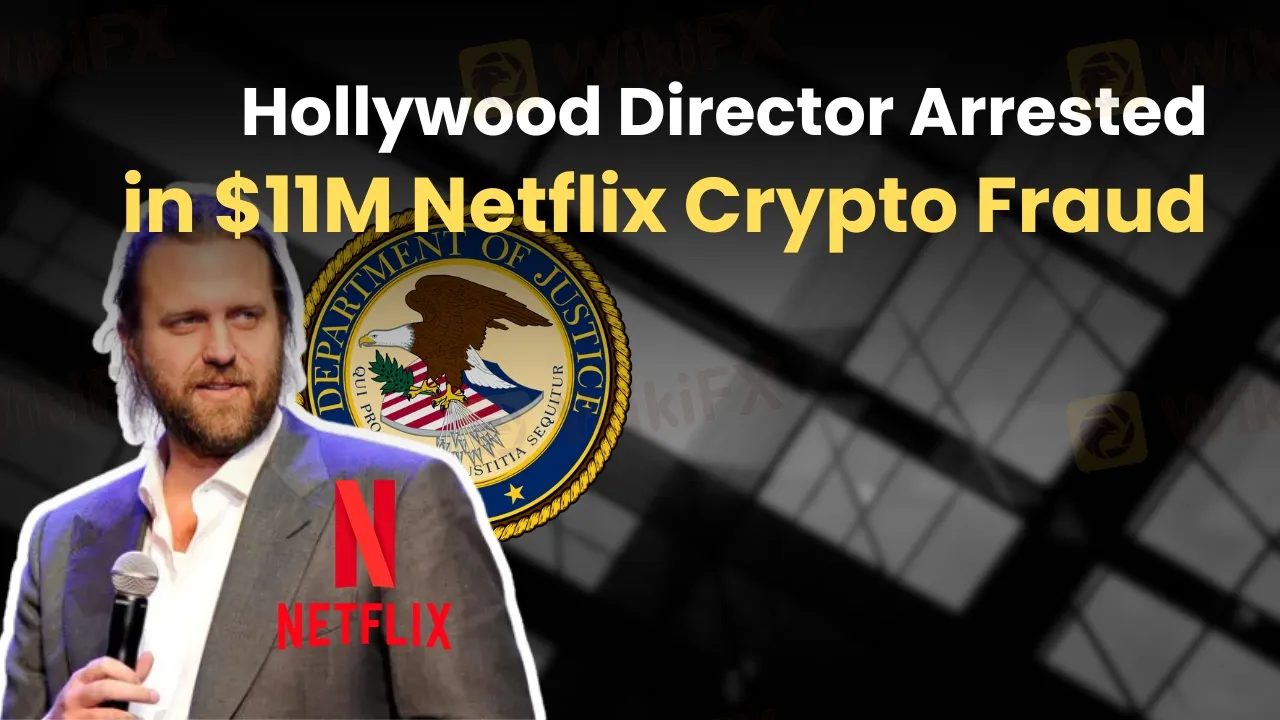
Carl Erik Rinsch, a Los Angeles-based writer and director famous for “47 Ronin,” found himself in handcuffs this week. The Hollywood director was arrested in West Hollywood on Tuesday, facing serious charges tied to an $11 million Netflix scam. Authorities allege Rinsch engaged in fraud and money laundering, squandering funds meant for a sci-fi series on risky crypto ventures and a lavish lifestyle. The story reads like a script gone wrong—only this time, the plot twist lands him behind bars.
Rinsch‘s troubles began when Netflix entrusted him with $44 million to produce “White Horse,” a science fiction series. According to prosecutors, he later requested an additional $11 million, claiming it was for the show. Instead of funding production, Rinsch diverted the cash into a personal brokerage account. What followed was a financial fiasco: he poured the money into securities and cryptocurrency trading, only to lose half of it—$5.5 million—in just two months. The Hollywood director’s gamble didn‘t pay off, and now he’s paying the price.
The indictment paints a vivid picture of excess. Beyond his crypto losses, Rinsch allegedly blew nearly $10 million on personal splurges. He dropped $3.8 million on furniture and antiques, $2.4 million on a fleet of luxury cars—including five Rolls-Royces and a Ferrari—and $652,000 on high-end watches and clothing. He also racked up $1.8 million in credit card bills and spent $1 million fighting Netflix in court over payment disputes. Its a spending spree that rivals the budgets of the films he once directed.

Authorities, including Acting U.S. Attorney Matthew Podolsky and FBI Assistant Director Leslie Backschies, laid out the charges in stark terms. Rinsch faces seven counts of wire fraud and money laundering, with a potential 90-year prison sentence if convicted. “The director stole $11 million from Netflix for ‘White Horse,’” they stated, underscoring the betrayal of trust at the heart of this case. For a man who once commanded Hollywood sets, the spotlight now shines on his alleged crimes.
This isn‘t just a Hollywood scandal—it’s a cautionary tale about the crypto craze. Rinsch‘s failed crypto trades highlight a broader trend of scams and losses plaguing the cryptocurrency world. Since 2011, fraudsters and money launderers have siphoned off over $80.8 billion from investors, with crypto-related scams surging in recent years. From fake job offers on platforms like Deribit to massive trading blunders—like the trader who lost $24 million swapping TRUMP meme coins for USDC—the risks are undeniable. Rinsch’s story fits right into this chaotic landscape.
The Hollywood director‘s arrest comes at a time when crypto scams are making headlines daily. His $5.5 million loss in volatile markets mirrors the struggles of countless others who’ve seen fortunes vanish overnight. It‘s a stark reminder of the high stakes involved—where promises of quick riches can dissolve into financial ruin. For Rinsch, the fallout is more than monetary; it’s a legal reckoning that could lock him away for decades.
As this case unfolds, it‘s clear that Rinsch’s tale is more than a celebrity downfall. It‘s a window into the wild intersection of Hollywood ambition, Netflix money, and the unpredictable world of crypto. Whether he’s a victim of his own hubris or a calculated con artist, one thing is certain: the Hollywood director‘s next chapter won’t be playing out on the big screen.

Disclaimer:
The views in this article only represent the author's personal views, and do not constitute investment advice on this platform. This platform does not guarantee the accuracy, completeness and timeliness of the information in the article, and will not be liable for any loss caused by the use of or reliance on the information in the article.
IG review for India in 2026: see the RBI Alert List entry, overseas regulation, login checks, forex limits, and a clear broker safety checklist.

Orbex, a Cyprus-based brokerage entity, has recorded 30 exposure complaints on WikiFX, a leading forex broker regulation inquiry tool, so far. Other review websites have also recorded a healthy number of complaints against the brokerage firm. These complaints largely talk about the alleged profit confiscations by the broker in the name of trading violations, difficulty in accessing fund withdrawals, capital losses due to artificial slippage, etc. In this Orbex review, we have investigated user complaints and provided a regulatory overview of the broker.
FCA warns Swift TradeX in a notice first published and updated on 1 September 2026. The UK Financial Conduct Authority says the firm may be providing or promoting financial services without permission, is not authorised, and may be targeting people in the UK. The notice names the website swifttradexai.com, a Worcester address and a UK telephone number, but also cautions that unauthorised businesses may use incorrect or borrowed contact details. The confirmed issue is authorisation status—not a court finding about every transaction. Anyone considering a payment should stop, verify the firm independently, and avoid using contact information supplied by the platform itself.
ThinkMarkets review for India: check the RBI Alert List, overseas entities, regulation, login security, forex rules, costs, withdrawals, and leverage risk.
WikiFXWikiFXWikiFXWikiFXWikiFXWikiFXWikiFXWikiFXWikiFXWikiFX