Abstract:The world of online trading has evolved rapidly, with automation becoming a dominant force. Among the most talked-about innovations are trading bots which are algorithmic programs designed to execute trades based on pre-set parameters. But how do these bots compare to copy trading, a system where investors replicate the trades of experienced traders? More importantly, can reliance on trading bots truly lead to financial freedom, or does it introduce more risks than rewards?
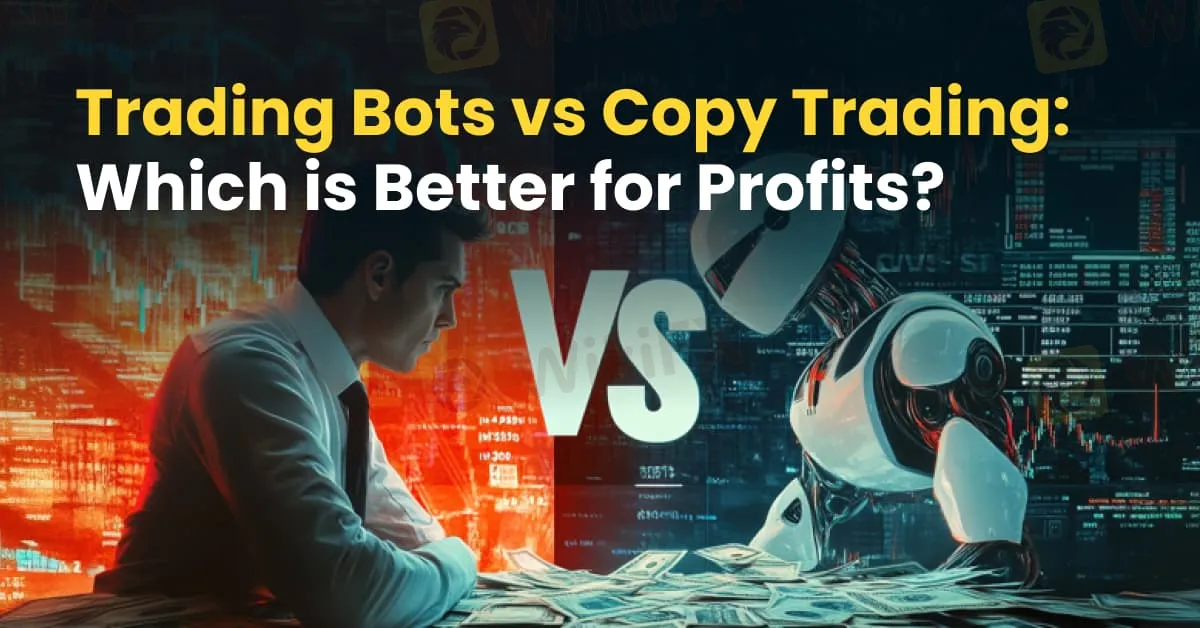
The world of online trading has evolved rapidly, with automation becoming a dominant force. Among the most talked-about innovations are trading bots which are algorithmic programs designed to execute trades based on pre-set parameters. But how do these bots compare to copy trading, a system where investors replicate the trades of experienced traders? More importantly, can reliance on trading bots truly lead to financial freedom, or does it introduce more risks than rewards?

Trading bots are designed to analyze market trends, execute trades, and manage risk, all without human intervention. These algorithms function 24/7, processing vast amounts of data at speeds no human trader can match. Some bots follow simple strategies, such as arbitrage or trend-following, while others use complex machine-learning models to predict market movements.
The appeal is clear: trading bots eliminate emotional decision-making, ensure disciplined execution, and provide access to opportunities that a human trader might miss. Yet, despite their advantages, they are not infallible. Market conditions change, and even the most advanced algorithms can suffer significant losses during periods of extreme volatility.

Copy trading, on the other hand, allows investors to mirror the trades of successful traders. Rather than relying on algorithms, users trust the expertise of seasoned professionals or influencers within the trading community. This strategy is often favoured by beginners who lack the time or knowledge to trade independently.
While copy trading does not require programming skills, it is not without risk. The strategy relies heavily on the performance of the chosen trader, meaning that if they make a poor decision, so does the investor following them. Unlike trading bots, which react to technical signals, human traders may rely on intuition or experience—factors that do not always guarantee success.

Many proponents of trading bots argue that automation is a gateway to financial freedom. The idea of generating passive income through algorithmic trading is undeniably appealing. However, true financial independence requires consistency and sustainability, both of which are difficult to guarantee with automated trading alone.
For one, markets are unpredictable. A bot that performs well in one market condition may fail in another. Additionally, many commercial trading bots promise high returns but lack transparency, leading to concerns about their reliability. Even professional-grade bots require regular adjustments and oversight to remain effective.
On the other hand, if used correctly, trading bots can act as a valuable supplementary tool. They can help traders execute strategies efficiently, remove emotional bias, and take advantage of opportunities that human traders might overlook. However, expecting them to single-handedly deliver financial freedom could be unrealistic.
Ultimately, both trading bots and copy trading present opportunities and risks. While automation can enhance trading efficiency, it is not a guaranteed route to wealth. Likewise, copy trading allows investors to leverage human expertise, but it still involves inherent risks.
So, is the future of trading fully automated, human-led, or a mix of both? The answer remains open for debate.