


India Q1 FY27 GDP Growth Hits 7.8%: 3 Scenarios for INR and Gold
India's Q1 FY27 GDP grew 7.8%, beating a 7.4% poll and RBI's 7.0% projection. See three conditional scenarios for INR, rates and gold.
Original

简体中文
繁體中文
English
Pусский
日本語
ภาษาไทย
Tiếng Việt
Bahasa Indonesia
Español
हिन्दी
Filippiiniläinen
Français
Deutsch
Português
Türkçe
한국어
العربية
اردو




Abstract:Financial scams are evolving faster than ever, and fraudsters are getting more creative in luring victims into traps. Whether it’s promising high returns or leveraging authority to build trust, scammers continuously innovate new ways to trick investors. From clone firms to cold calling schemes, it’s essential to understand how these scams work to protect your hard-earned money. This comprehensive guide by WikiFX will help you recognize and avoid common financial scams.

Clone firm scams are among the most devious types of financial fraud. These scams involve fraudsters creating fake companies that closely resemble legitimate financial institutions. They often replicate the name, address, and registration details of genuine firms to appear credible. Clone firms may even use professional-looking websites, social media profiles, and fake documentation to mislead investors.
How to Identify
• Check Official Registries: Always verify company details through regulatory bodies like FCA or SEC.
• Spot the Minor Differences: Fraudsters often make slight changes in company names or website URLs.
• Contact Directly: Use official contact details from the authorized firm to verify any suspicious communication.
Many online trading platforms lure investors by promising massive returns through speculative trading on forex, cryptocurrencies, or stocks. These platforms often appear professional and may even have customer support that sounds credible. However, the real motive is to collect deposits and vanish without a trace.Warning Signs
• Too Good to Be True: Unrealistically high returns with low risk.
• Fake Testimonials: Glowing reviews from fake users.
• Unregistered Platforms: Platforms without regulatory authorization.
Cold calling involves receiving unsolicited phone calls from individuals claiming to offer investment opportunities. These calls usually come with high-pressure tactics, urging you to act quickly before the “opportunity” vanishes. Often, the caller uses psychological manipulation to make you feel guilty for not acting fast enough.
Advance payment scams require you to make an upfront payment, usually under the pretense of securing a high-yield investment or unlocking a frozen account. Once the payment is made, the scammers either disappear or request even more money to resolve unexpected “complications.”
These scams specifically target="_blank" kwlink="6384064000816950219725">target individuals who have already lost money in previous scams. Fraudsters contact victims, claiming to be able to recover lost funds for an upfront fee. Once the fee is paid, the supposed recovery never materializes.
Scammers use social media platforms to promote fake investment opportunities. They might impersonate celebrities or use paid ads to lure victims. The investment schemes often look legitimate and promise quick profits, but once funds are sent, victims are blocked and left without recourse.
These schemes promise consistent returns that are paid out from new investors money rather than actual profit. As long as new investors keep coming in, the scheme appears sustainable. Once recruitment slows down, the entire structure collapses, leaving the majority of investors empty-handed.
Financial scams are becoming increasingly sophisticated, leveraging new technologies and exploiting human psychology to deceive victims. Always perform thorough research and verification before investing, and never make decisions under pressure. Stay informed, stay cautious, and protect your financial future.
Disclaimer:
The views in this article only represent the author's personal views, and do not constitute investment advice on this platform. This platform does not guarantee the accuracy, completeness and timeliness of the information in the article, and will not be liable for any loss caused by the use of or reliance on the information in the article.
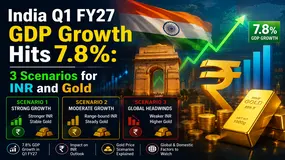
India's Q1 FY27 GDP grew 7.8%, beating a 7.4% poll and RBI's 7.0% projection. See three conditional scenarios for INR, rates and gold.
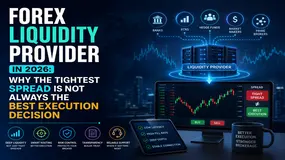
Choosing a forex liquidity provider is not a search for the lowest displayed spread or the longest provider list. It is a broker decision about pricing integrity, depth, routing, credit, reporting, incident response, and client communication. This 2026 guide explains how a forex LP, FX liquidity provider, or liquidity provider forex arrangement fits into a broker’s execution chain; what to test before onboarding; why a “best forex liquidity provider” claim cannot replace due diligence; and how to compare cost beyond commission. Use the execution-quality scorecard, provider questions, routing scenarios, and 90-day onboarding plan to assess whether a liquidity relationship can support your actual client mix, instruments, risk model, and jurisdiction. The goal is not to make a universal ranking. It is to build evidence that your broker can explain, supervise, reconcile, and recover its execution service when market conditions are difficult.
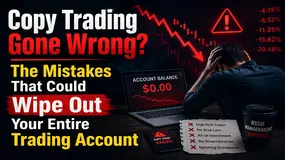
We all love trading geniuses and their strategies that earn them profits season after season. And we also love following them to make our investment journey seamless. Copy trading is one such tactic that beginners employ to enter the forex market. What do most of them usually do? They pick an experienced investor from the list and let the platform replicate every trade automatically. The fact that experienced traders continually earn profits, the feeling of copying their trades remains intense. However, the uncertain forex landscape can bite you hard by simply copying trades and not focusing on technical analysis and the charts during the day. Beginners can have a set of preconceived notions that can potentially open the gate for losses. In this article, we have highlighted such mistakes traders should avoid.

As the global forex market continues to move toward regulatory convergence and greater transparency, “trust,” a concept long and frequently emphasized, is gradually evolving from a subjective perception into a quantifiable and verifiable industry standard. WikiFX announces that its industry initiative, “Let Trust Be Seen,” has achieved phased results, attracting broad attention and participation worldwide.
WikiFXWikiFXWikiFXWikiFXWikiFXWikiFXWikiFXWikiFXWikiFXWikiFX