Abstract:The UN report reveals the growing threat of transnational crime, driven by AI, money laundering, and scams across Asia, Africa, and Latin America.
Organized crime groups from East and Southeast Asia are stepping up their activities worldwide, finding ways to thrive despite stronger efforts by law enforcement, a new United Nations (UN) study points out. Fresh online platforms, smarter money laundering systems, and tools like artificial intelligence (AI) and deepfakes are pushing whats now called “crime as a service” to new heights.
Over the past several years, scam networks have taken root across Southeast Asia, particularly in border zones like Cambodia, Laos, Myanmar, and the Philippines. These clever criminals have built flexible scam hubs that move quickly, staying out of reach of local police. Theyve been tricking people everywhere with made-up love stories, shady investment promises, and secret gambling setups.

But the UN study shows these scams aren‘t just a regional issue anymore. They’re spreading to places like Africa, Latin America, and beyond. The growth has been striking, especially in areas where police presence is weak, turning those spots into perfect bases for these lawbreakers to grow. A big reason for this shift is the heat coming down on scam operations in Southeast Asia. As those areas crack down harder, the crime groups are branching out to places with looser rules. “This reflects both a natural expansion as the industry grows and seeks new ways and places to do business, but also a hedging against future risks should disruption continue and intensify in Southeast Asia,” noted Benedikt Hofmann, who serves as the acting regional lead for Southeast Asia and the Pacific at the UN Office on Drugs and Crime (UNODC).
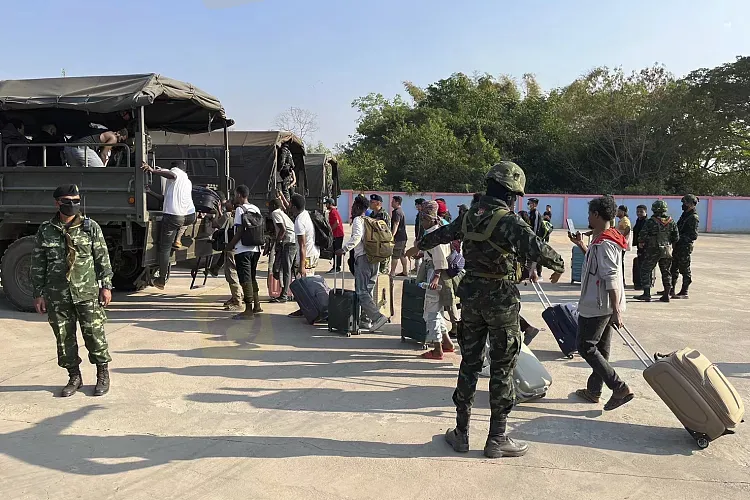
The size of these operations is mind-blowing. UNODC figures suggest hundreds of large-scale scam hubs are pulling in almost $40 billion (€35 billion) every year. That kind of money shows how dangerous these networks are, now reaching into Africa, South Asia, the Middle East, and even some Pacific islands. They‘re not just running scams—they’re also washing cash, moving people illegally, and hiring help in places like Europe, North America, and South America.
Nigeria stands out as a key trouble spot, with police swooping in on crypto and romance scams linked to Southeast Asian crews. Nearby, Zambia and Angola have also dug up cyberfraud tied to Asian groups.
In Latin America, Brazil is facing a tough climb with more online fraud, gambling, and money laundering connected to Southeast Asian gangs. Late in 2023, Peru uncovered a grim case where over 40 Malaysians were forced into cybercrime by the Taiwan-based Red Dragon crew after being trafficked.

The UN report makes it clear that Southeast Asian outfits arent alone in this. Other criminal bands from around the world are joining in, making it trickier to tackle this wave of digital wrongdoing.
New online markets, a flood of stolen personal info, and better malware and AI tools are smoothing the way for these crooks to work across borders. These upgrades keep them hidden while they run tight, polished operations.
“The convergence between the acceleration and professionalization of these operations on the one hand and their geographical expansion into new parts of the region and beyond on the other translates into a new intensity in the industry — one that governments need to be prepared to respond to,” Hofmann emphasized, stressing the need for countries to work together fast.
As these crime rings keep adapting and stretching further, the pressure on law enforcement grows heavier. Governments everywhere have to move quickly and adjust to this shifting scene to take on the rising danger of worldwide criminal networks.