WikiFX Trending Topics Analyst Initiative
Share Your Expertise on What’s Moving the Market.
简体中文
繁體中文
English
Pусский
日本語
ภาษาไทย
Tiếng Việt
Bahasa Indonesia
Español
हिन्दी
Filippiiniläinen
Français
Deutsch
Português
Türkçe
한국어
العربية
Abstract:Traders are stepping back from ultra-high leverage in 2025, turning toward measured positions and capital preservation.
For much of the past decade, high leverage has been the hallmark of retail forex trading. Ratios as high as 1:500 were widely used, promoted by brokers as a tool to amplify profits on small capital. However, 2025 is revealing a clear change in sentiment: survival and sustainability are overtaking the pursuit of rapid gains.
Following a period of central bank tightening and heightened geopolitical instability, volatility in currency markets has increased noticeably. Sharp moves in major pairs have exposed the vulnerability of overleveraged positions. In response, traders are increasingly reducing their exposure, cutting down lot sizes and relying more on risk management tools than on leverage.
Platforms like X, Discord, and Telegram have seen a surge in educational content from seasoned traders advocating for tighter stop-losses and lower-risk positions. Unlike previous years, this new wave of traders is not afraid to take it slow — they value staying in the game over chasing outsized returns.
Regulators have played their part. Inspired by the European Securities and Markets Authority (ESMA), more regions are adopting stricter leverage caps—often limiting retail accounts to 1:30 or lower. While offshore brokers continue offering high leverage, those deals now come with reputational and legal risks.
In parallel, brokers are shifting how they onboard and educate clients. Many now default to conservative leverage settings, and some have integrated pre-trade risk summaries—clearly showing margin usage and liquidation levels before a trade is confirmed.
The trend is not about fear—its about discipline. In an environment marked by surprise rate moves and unpredictable news cycles, traders who respect capital preservation stand a better chance at longevity.
Newer traders are also increasingly adopting tools like risk calculators and volatility trackers. Daily risk caps of 1–2% per trade are becoming standard. Lot sizes are scaled based on market events. These changes reflect a shift from speculative behavior toward structured, rule-based strategies.
2025's forex landscape is reshaping around a core principle: measured risk-taking. While leverage remains a powerful tool, its indiscriminate use is increasingly seen as a liability, not an advantage. The traders most likely to succeed this year are not those chasing big wins—but those who manage small losses and compound consistency.

Disclaimer:
The views in this article only represent the author's personal views, and do not constitute investment advice on this platform. This platform does not guarantee the accuracy, completeness and timeliness of the information in the article, and will not be liable for any loss caused by the use of or reliance on the information in the article.

Share Your Expertise on What’s Moving the Market.

In a forex market where fundamental and technical factors impact the currency pair prices, volatility is expected. If the price volatility acts against the speculation made by traders, it can result in significant losses for them. This is where a stop-loss order comes to their rescue. It is one of the vital investment risk management tools that traders can use to limit potential downside as markets get volatile. Read on as we share its definition and several strategies you should consider to remain calm even as markets go crazy.

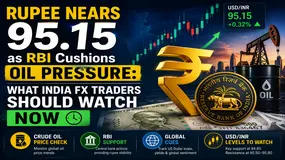
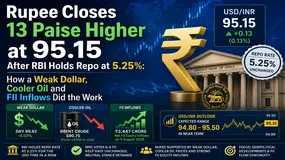
The forex market is a happening place with currency pairs getting traded almost non-stop for five days a week. Some currencies become stronger, some become weaker, and some remain neutral or rangebound. If you talk about the Indian National Rupee (INR), it has dipped sharply against major currencies globally over the past year. The USD/INR was valued at around 85-86 in Feb 2025. As we stand in Feb 2026, the value has dipped to over 90. The dip or rise, whatever the case may be, impacts our daily lives. It determines the price of an overseas holiday and imported goods, while influencing foreign investors’ perception of a country. The foreign exchange rates change constantly, sometimes multiple times a day, amid breaking news in the economic and political spheres globally. In this article, we have uncovered details on exchange rate fluctuations and key facts that every trader should know regarding these. Read on!

Understanding how to add funds to your account and, more importantly, how to take them out is essential for safe trading. For any trader thinking about ACY Securities, making an ACY SECURITIES deposit is simple, but the ACY SECURITIES withdrawal process has many serious complaints and concerns. While ACY says it is an established, regulated broker, many users have complained specifically about withdrawal problems, creating a confusing and often contradictory picture. This guide provides a complete and critical analysis. We will first explain the official steps for deposits and withdrawals, including methods, fees, and stated timelines. We will then take a deep look at patterns found in over 180 real user complaints, examining the potential warning signs and risks. By combining official information with real-world user experiences and regulatory warnings, this article aims to give you the clarity needed to make an informed decision about the safety of your funds with ACY Securities.