


India Q1 FY27 GDP Growth Hits 7.8%: 3 Scenarios for INR and Gold
India's Q1 FY27 GDP grew 7.8%, beating a 7.4% poll and RBI's 7.0% projection. See three conditional scenarios for INR, rates and gold.
Original

简体中文
繁體中文
English
Pусский
日本語
ภาษาไทย
Tiếng Việt
Bahasa Indonesia
Español
हिन्दी
Filippiiniläinen
Français
Deutsch
Português
Türkçe
한국어
العربية
اردو




Abstract:BaFin’s latest survey finds that over half of retail investors struggle to understand structured products—echoing similar transparency issues within the forex industry.

Germanys Federal Financial Supervisory Authority (BaFin) has published a new report revealing that over half of retail investors struggle to understand structured investment products, particularly complex instruments like express certificates. While the findings focus on traditional financial products, they raise broader concerns that also resonate within the forex industry.
The review, conducted between May 2024 and February 2025, came in response to a surge in certificate sales after the end of the low interest rate era. For the first time, BaFin combined regulatory inspections with consumer surveys and mystery shopping visits to assess how products are designed, marketed, and understood.
While most institutions met basic regulatory obligations, BaFin flagged multiple deficiencies—including vague cost structures, insufficient risk modeling, and weak safeguards against sales-driven conflicts of interest.
These concerns are familiar to many in the forex trading space, where some brokers—especially unlicensed ones—obscure true trading costs through complex pricing models, hidden spreads, or misleading fee claims.
BaFin found that many issuers failed to properly account for early product maturity risk. In cases where the underlying asset price rises rapidly, clients are forced to reinvest at potentially less favorable terms. This critical risk was not clearly explained to customers during the sales process.
The report also noted discrepancies in how distribution fees are disclosed—some banks classify them as service charges, while others fold them into the product price. Such inconsistency, though technically legal, can hinder customers ability to make informed comparisons across financial products.
In the forex sector, similar opacity exists. For example, some brokers promote “zero-fee” trading while quietly profiting from wider spreads or slippage, leaving clients in the dark about their true costs.
BaFin says it will follow up with firms where deficiencies were identified and may expand oversight to include more institutions. The regulators focus appears to be shifting from reactive enforcement to proactive supervision of product development and sales practices.
For forex traders, this is a timely reminder. The risk isnt just in market volatility—but also in choosing the wrong broker. Many platforms aggressively market high-leverage products without adequately explaining the risks or total cost of trading.
WikiFX Reminder: Always check whether a broker is properly licensed. Use reliable sources to review their regulatory status, past disputes, and user feedback. Dont fall for “get rich quick” claims—opt for brokers with transparent pricing, clear communication, and a proven track record to better protect your investments.
Disclaimer:
The views in this article only represent the author's personal views, and do not constitute investment advice on this platform. This platform does not guarantee the accuracy, completeness and timeliness of the information in the article, and will not be liable for any loss caused by the use of or reliance on the information in the article.

India's Q1 FY27 GDP grew 7.8%, beating a 7.4% poll and RBI's 7.0% projection. See three conditional scenarios for INR, rates and gold.
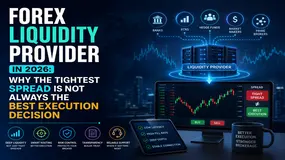
Choosing a forex liquidity provider is not a search for the lowest displayed spread or the longest provider list. It is a broker decision about pricing integrity, depth, routing, credit, reporting, incident response, and client communication. This 2026 guide explains how a forex LP, FX liquidity provider, or liquidity provider forex arrangement fits into a broker’s execution chain; what to test before onboarding; why a “best forex liquidity provider” claim cannot replace due diligence; and how to compare cost beyond commission. Use the execution-quality scorecard, provider questions, routing scenarios, and 90-day onboarding plan to assess whether a liquidity relationship can support your actual client mix, instruments, risk model, and jurisdiction. The goal is not to make a universal ranking. It is to build evidence that your broker can explain, supervise, reconcile, and recover its execution service when market conditions are difficult.
The visible fee in an MT4 white label proposal is rarely the real cost of operating it. For an existing broker, the decision is not simply whether an MT4 white label platform is “cheap” or “expensive.” The real question is whether the commercial model remains viable after integration, support, data, client migration, compliance, and exit costs are included. That is why an MT4 white label cost review should be built as a 24- to 36-month operating case. It should compare three credible choices: 1. Keep the present MT4 setup and improve its weakest controls. 2. Replace the MT4 white label provider but retain the client proposition. 3. Migrate selected clients or products to another platform while running MT4 in parallel. This guide explains how to build that case without relying on headline prices or generic vendor claims.
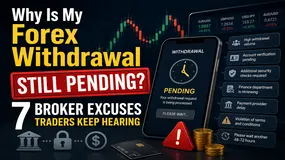
Withdrawal delays are precisely the complaint we keep receiving on WikIFX, a veteran in the forex regulation inquiry space. While some users receive withdrawal access initially and find rejections on their applications later, some fail to receive a single approval. Some delays usually result from genuine compliance requirements that brokers need to adhere to. However, in many cases, traders have accused the broker of repeated excuses as part of its alleged strategy to deny a seamless fund release. A pending withdrawal cannot be an outright indicator of fraudulent activity. Financial institutions, including forex brokerage entities, need to abide by the anti-money laundering (AML) and Know Your Customer (KYC) regulations. However, as the monitoring process stretches beyond weeks or months, traders become frustrated and raise questions over the broker’s reliability.
WikiFXWikiFXWikiFXWikiFXWikiFXWikiFXWikiFXWikiFXWikiFXWikiFX