Abstract:The final and most important piece of advice we can offer is this: take your newfound knowledge and apply it in a risk-free environment. Before you commit a single dollar of real capital, open a demo account with a reputable broker. Use it to trade both the S&P 500 and the EUR/USD. Experience the different rhythms of the markets. See which one “clicks” with your intuition and trading style. This hands-on experience is the ultimate teacher and will be the final step in making your informed decision.
Many new traders search for “what are indices in forex?”. This question comes from a basic misunderstanding, and the simple answer is: stock indices and the foreign exchange (forex) market are two separate types of investments. You do not trade indices inside the forex market. However, the same brokers often offer both, and you can trade them on the same platforms, which causes confusion. This guide will clear up that confusion completely by showing the clear differences between these two important markets. We will give you the clarity you need to move forward in your trading with confidence.
This complete guide will teach you everything you need to know. By the end, you will understand both markets like a professional and have a clear way to decide which one is right for you. Here is what we will cover:
- The clear definition of a stock index.
- The basics of the Forex market.
- A direct comparison of Indices vs. Forex.
- How these two markets affect each other.
- A framework to help choose the right market for you.
Breaking Down The Main Myth
They Are Not The Same
Let's say this as clearly as possible: you do not trade indices inside the forex market. They are separate tools. You trade currency pairs in the forex market. You trade index CFDs (Contracts for Difference) in the indices market. Both are often available through the same broker, which is why the terms get mixed up.
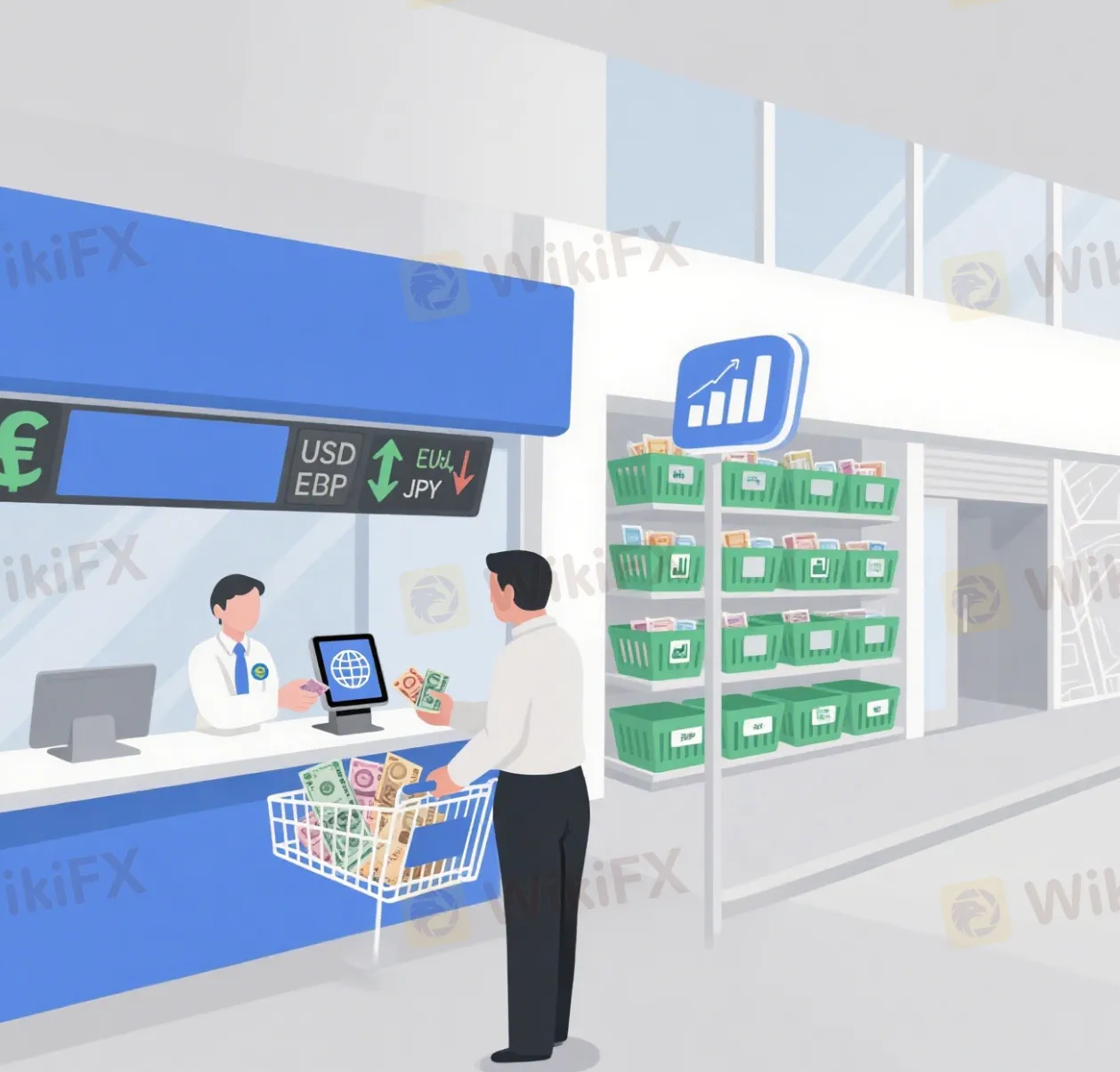
Think of a financial broker as a large supermarket. The Forex market is the currency exchange counter at the front of the store. The Indices market is the aisle with pre-packaged baskets of the store's top-selling products. You access both through the same supermarket, using the same shopping cart (your trading platform), but they are completely different items with different features.
Why The Confusion Exists
The overlap in terms is a modern problem caused by the rise of multi-asset online brokers. Twenty years ago, a forex specialist would likely not have offered stock indices, and a stockbroker might not have offered forex. Today, brokers want to be a one-stop shop.
This convenience has both good and bad sides. While it's great for traders to access multiple markets from a single account, it confuses beginners. Because you can use the same MetaTrader 4 or MetaTrader 5 platform to look at a chart of EUR/USD and the S&P 500, it's easy to think they are part of the same family. They are not. They are simply neighbors in the same digital brokerage house.
Understanding Stock Indices
To trade any asset, you must first understand what it is. A stock index is not a company or a physical asset; it's a measurement. It is a way to measure the change in a group of stocks that represent a part of the overall market. Think of it as a market thermometer.
A Basket of Stocks
The easiest way to think about an index is as a “basket of stocks.” Imagine you wanted to know how the U.S. technology sector is doing. Instead of tracking thousands of individual tech companies, you could create a basket containing the 100 largest and most important ones. By tracking the total value of this single basket, you get a powerful, quick view of the entire sector's health. This is exactly what the NASDAQ 100 index does.
The main purpose of an index is to serve as a benchmark. Investors and fund managers use indices like the S&P 500 to measure their own performance. If their portfolio grew by 8% in a year where the S&P 500 grew by 12%, they did worse than the market. For traders, indices offer a way to bet on the direction of an entire economy or sector without having to pick individual “winner” stocks.
How Indices Are Calculated
The value of an index comes from the prices of its underlying stocks. The most common method for this calculation is market-capitalization weighting. In a market-cap-weighted index, companies with a larger market capitalization (stock price multiplied by the number of outstanding shares) have a bigger impact on the index's movement.
For example, the S&P 500 is a market-cap-weighted index. A 1% move in a corporate giant like Apple or Microsoft will have a much larger effect on the S&P 500's value than a 1% move in one of the smaller companies in the index. This is by design, as it makes sure the index accurately shows the state of the largest and most important players in the U.S. economy. The other, less common method is price-weighting (like the Dow Jones Industrial Average), where stocks with higher share prices have more influence, regardless of the company's overall size.
Major Global Indices
While there are hundreds of indices, retail traders typically focus on a handful of the most liquid and well-known ones. These represent the economic health of major global powers. Trading these indices via CFDs allows you to take a position on the performance of an entire country's stock market.
Understanding The Forex Market
Now let's turn our attention to the other side: the foreign exchange market. Where indices represent a basket of stocks, forex represents the exchange rate between two national currencies. It is a completely different world, driven by different forces.
The Art of Currency Exchange
Forex, or FX, is the global marketplace for exchanging national currencies. It is decentralized, meaning it has no central physical location. Instead, trading happens electronically over-the-counter (OTC) through a network of banks, corporations, central banks, investment management firms, and retail brokers.
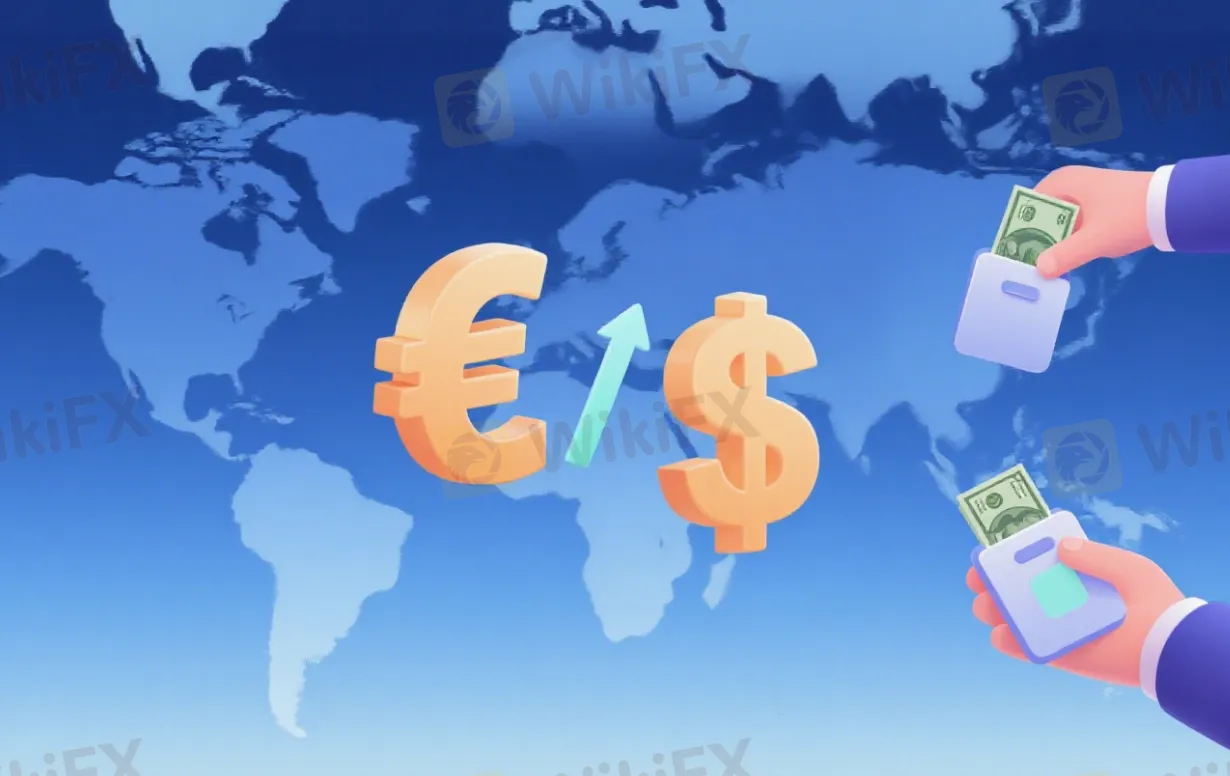
At its core, forex trading is the act of buying one currency while selling another at the same time. This is why currencies are always quoted in pairs. For example, the EUR/USD pair represents the value of the Euro compared to the U.S. Dollar.
- When you “buy” EUR/USD, you are buying Euros and selling U.S. Dollars. You do this if you believe the Euro will get stronger against the Dollar.
- When you “sell” EUR/USD, you are selling Euros and buying U.S. Dollars. You do this if you believe the Euro will get weaker against the Dollar.
The first currency in a pair is the “base” currency, and the second is the “quote” currency. The price quoted is how many units of the quote currency are needed to buy one unit of the base currency.
The Engine of Forex
What makes these exchange rates go up and down? The price of a currency, like any asset, is determined by supply and demand. In forex, this is driven by large-scale economic factors. A forex trader is less concerned with a single company's earnings and more concerned with the economic health and policy of an entire nation. The key drivers include:
- Interest Rates: This is probably the most important driver. Central banks (like the U.S. Federal Reserve or the European Central Bank) set their nation's interest rates. Higher rates tend to attract foreign investment, increasing demand for and the value of that country's currency.
- Economic Data: Reports on Gross Domestic Product (GDP), inflation (CPI), employment numbers, and retail sales provide a snapshot of an economy's health. Strong data can boost a currency's value.
- Political Stability: Political problems, elections, and international relations can create uncertainty and cause investors to leave a currency for a perceived “safe-haven” currency like the U.S. Dollar or Swiss Franc.
- Market Sentiment: The collective mood of traders can also drive markets. If traders are feeling risk-averse, they may sell off currencies from emerging markets and buy safer ones.
The Scale of Forex
To appreciate the difference between indices and forex, one must understand the huge scale of the forex market. It is, by a massive margin, the largest and most liquid financial market in the world. According to the 2022 Triennial Central Bank Survey from the Bank for International Settlements (BIS), the forex market's average daily trading turnover reached an amazing $7.5 trillion. This is much larger than the volume of all the world's stock markets combined, providing unmatched liquidity.
Indices vs. Forex Comparison
Now that we have a solid foundation in both markets, we can place them side-by-side for a direct comparison. Understanding these key differences is critical for determining which market might better suit your trading personality, schedule, and goals. The following table provides a high-level overview, which we will then explore in more detail.
The Ultimate Comparison Table
Volatility and Trading Hours
A key practical difference lies in volatility and market hours. An index, by its nature as a diversified basket, tends to have smoother price action. The poor performance of one or two companies is often balanced by the strong performance of others, reducing volatility. A single currency pair, however, can react strongly to a single news event, like an unexpected interest rate decision, causing sharp, sudden spikes.
Trading hours also affect a trader's lifestyle. Index trading is session-based. If you want to trade the S&P 500, the most volume and activity will occur during the New York stock exchange hours (9:30 AM to 4:00 PM EST). The market is effectively closed outside of these core hours (though some futures trading occurs). The forex market, in contrast, “follows the sun.” It operates 24 hours a day, starting with the Sydney session, moving to Tokyo, then London, and finally New York. This provides huge flexibility, allowing traders in any time zone to find an active session to trade.
Influences and Focus
The type of research you enjoy is a major factor in choosing a market. An index trader must pay attention to both big-picture economic data (like GDP and inflation) and smaller economic factors. They might spend their time analyzing the earnings reports of top-weighted companies like Apple and Amazon or identifying trends in the technology or healthcare sectors. Their focus is on corporate health and broad investor sentiment.
A forex trader, on the other hand, is almost exclusively a macro-analyst. Their world revolves around the decisions and statements of central bankers. They live and breathe the press conferences of the Federal Reserve Chair and the President of the European Central Bank. Their analysis is centered on interest rate differences, inflation targets, trade balances, and political tensions. It's a top-down view of the global economy, whereas index trading blends top-down and bottom-up analysis.
The Interplay in Action
Theory is useful, but seeing these markets react to a real-world event provides valuable insight. While they are distinct markets, they do not exist in isolation. Major economic news affects all asset classes, but often in different ways. Understanding this interplay is a mark of a sophisticated trader.
Case Study: A Fed Rate Hike
Let's analyze the market reaction to a classic scenario: The U.S. Federal Reserve (FOMC) announces a higher-than-expected interest rate hike to fight persistent inflation. This single event sends powerful ripples through both the forex and index markets.
Impact on Forex (USD)
The immediate reaction in the forex market is a strengthening of the U.S. Dollar (USD). The logic is straightforward: higher interest rates mean a higher return on capital held in that currency. Global investors, seeking the best yield, will sell other currencies (like the Euro or Japanese Yen) and buy U.S. Dollars to take advantage of the higher rate.
- In this scenario, the EUR/USD pair would fall sharply. This is because the USD (the quote currency) is strengthening relative to the EUR (the base currency).
- Similarly, the USD/JPY pair would rise. Here, the USD is the base currency, so its strengthening is reflected as an upward move on the chart.
The forex market reacts directly and logically to the change in interest rate differences.
Impact on Indices (S&P 500)
The reaction in the U.S. stock market, represented by an index like the S&P 500, is often the opposite. A higher-than-expected rate hike is typically negative for stocks for two main reasons:
1. Increased Borrowing Costs: Companies rely on debt to finance operations and growth. Higher interest rates make this debt more expensive, squeezing profit margins and potentially slowing down expansion plans.
2. Fears of Economic Slowdown: The very purpose of a rate hike is to cool down the economy to control inflation. This can lead to reduced consumer spending and a potential recession, which is bad for corporate earnings.
Therefore, upon the announcement, the S&P 500 would likely fall as investors sell off stocks due to fears of lower future profits and a weaker economy.
The Takeaway
This single event—a rate hike—caused the U.S. Dollar to strengthen but U.S. stocks to weaken. A trader who was long EUR/USD and long the S&P 500 would have lost on both positions. This case study perfectly shows that while the same news drives both markets, the underlying mechanics cause them to react in completely different, sometimes opposite, ways.
Choosing Your Trading Path
The most common question we get from new traders is, “Which market is better?” The honest answer is that there is no “better” market, only the market that is a better fit for you. As experienced traders, we have learned that success often comes from matching your market choice with your personality, lifestyle, and natural interests. This self-assessment framework is the same one we use to guide new traders. Ask yourself these questions honestly.
1. What is Your Trading Time?
This is a practical, non-negotiable starting point. When can you actually be at your screen, focused and ready to trade?
- If you have a standard 9-to-5 job in the U.S. and can only trade in the evenings, the forex market may be a better choice. The Asian and London sessions will be active, offering plenty of liquidity and opportunity in pairs like AUD/JPY or GBP/USD while U.S. stock indices are quiet.
- If you have the flexibility to trade during the U.S. market open (9:30 AM to 11:30 AM EST), you have a great opportunity to trade indices like the S&P 500 or NASDAQ 100. This is when they experience peak volume and volatility, offering the clearest trading opportunities of the day.
2. How Do You Handle Pace?
Your psychological tolerance for stress and speed is a critical factor.
- If you prefer smoother price action, enjoy identifying and following longer-term trends, and get stressed by sudden, violent price spikes, indices might be a better starting point. The built-in diversification of an index often filters out the “noise” of single-stock news, leading to more readable trends.
- If you thrive on fast-paced action, can make quick decisions, and have the discipline to manage the risk of sharp, news-driven moves, forex majors might be more your style. Trading a Non-Farm Payrolls report in EUR/USD is an adrenaline-filled experience that some traders love and others hate.
3. What Research Do You Enjoy?
Trading is a business, and part of that business is research. You are more likely to succeed if you are genuinely interested in the subject matter.
- If you are fascinated by business, technology, innovation, and corporate strategy, you will likely enjoy the fundamental analysis required for trading indices. You'll find yourself reading about Apple's new product line, analyzing sector-wide trends, and digging into corporate earnings reports.
- If you are drawn to global economics, international politics, and the strategic chess match played by central banks, you will be naturally aligned with the forex market. You'll enjoy reading about monetary policy, inflation data, and how political events impact currency flows.
A Concluding Scorecard
To help summarize your thoughts, use this simple table. For each question, place a mental checkmark in the column that best describes you. The column with the most checkmarks can point you toward a good starting market.
Key Risks to Understand
No guide would be complete without an honest discussion of risk. Both markets offer significant opportunities, but they also carry significant risks. Understanding these is the first step toward managing them.
Risks in Index Trading
- Systemic Market Risk: While an index is diversified across many companies, it cannot protect against risk that affects the entire market. A stock market crash, a recession, or a global crisis will pull the entire index down.
- Gapping Risk: Because index markets have official closing and opening times, significant news can occur overnight. This can cause the market to “gap” open far higher or lower than its previous close, potentially jumping over a stop-loss order and resulting in a larger-than-expected loss.
- Leverage Risk: CFD brokers offer leverage on indices. While typically lower than in forex, it still magnifies losses just as it magnifies profits. A small adverse move in the index can lead to a substantial loss in a leveraged account.
Risks in Forex Trading
- Extreme Volatility: This is the most prominent risk. A surprise announcement from a central bank or a major political event can cause currency pairs to move hundreds of pips in a matter of seconds, leading to rapid and severe losses if you are on the wrong side.
- High Leverage Risk: Forex brokers are known for offering very high leverage (e.g., 100:1 or more). This is the single biggest reason why new forex traders lose money. It is a powerful tool that must be used with extreme caution and a deep understanding of position sizing.
- Interest Rate Risk: The core driver of forex is also a core risk. An unexpected shift in a central bank's policy can fundamentally and permanently re-price a currency, potentially invalidating a long-term trading plan.
Making an Informed Decision
Our journey began by clarifying the phrase “what are indices in forex.” We have now established with certainty that they are two distinct markets, each with its own unique characteristics, drivers, and personality. We defined an index as a basket of stocks that acts as an economic barometer and forex as the global market for exchanging national currencies.
We compared them head-to-head, highlighting the crucial differences in volatility, trading hours, and fundamental influences. The “better” market does not exist; the right choice is a personal one. It depends on your schedule, your tolerance for risk, and the type of analysis you find most engaging. The self-assessment framework provided is a starting point for that personal discovery.
The final and most important piece of advice we can offer is this: take your newfound knowledge and apply it in a risk-free environment. Before you commit a single dollar of real capital, open a demo account with a reputable broker. Use it to trade both the S&P 500 and the EUR/USD. Experience the different rhythms of the markets. See which one “clicks” with your intuition and trading style. This hands-on experience is the ultimate teacher and will be the final step in making your informed decision.