


Why Most Retail Traders Fail: What the Numbers Reveal
Retail trading data shows why so many traders quit or lose money, from short survival periods and high costs to overconfidence, emotional decisions, and poor risk control.
Original

简体中文
繁體中文
English
Pусский
日本語
ภาษาไทย
Tiếng Việt
Bahasa Indonesia
Español
हिन्दी
Filippiiniläinen
Français
Deutsch
Português
Türkçe
한국어
العربية
اردو




Abstract:It feels personal, doesn't it? You stare at the GBP/USD chart. It’s been consolidating for hours. Suddenly, a massive green candle explodes upward. You hesitate. You want to see if it’s real. It keeps going. Another green candle. Now you’re sweating. You think, “This is it. The breakout is happening. I’m missing the move.”
It feels personal, doesn't it?
You stare at the GBP/USD chart. It‘s been consolidating for hours. Suddenly, a massive green candle explodes upward. You hesitate. You want to see if it’s real. It keeps going. Another green candle. Now you‘re sweating. You think, “This is it. The breakout is happening. I’m missing the move.”
So, you finally click BUY.
And exactly 30 seconds later, the price stalls, turns red, and crashes right back down. You bought the absolute top. Again.
You aren't unlucky. The market isn't rigged specifically to hunt your $500 account. You are suffering from a predictable psychological flaw that institutional traders act on every single day. Let's fix your timing.
The reason you enter at the worst spot is that you are entering based on validation, not probability.
When a trend is obvious to everyone, its usually too late. By the time you feel comfortable enough to enter a trade because “it's clearly going up,” the people who moved the market (the banks and hedge funds) are already looking to take their profits.
You are acting as their “exit liquidity.” They bought at the bottom when it looked scary. They are selling to you at the top when it looks safe.
In Forex, comfort is expensive. If a trade feels safe and obvious, you are likely about to lose money. You need to stop chasing the bus after it has left the station. If you missed the initial burst, the trade is gone. Sit on your hands.
Sometimes, your bad entry isn't entirely your fault. There are external factors that can turn a decent idea into a losing position.
We need to talk about spreads and slippage.
You might see a price level you like, click execute, and suddenly you are filled 5 or 10 pips worse than where you clicked. This is common during high volatility news events (like NFP), but if this happens to you during normal market hours, you have a broker problem.
Shady brokers love “slippage.” They see your order and fill it at a price that puts you instantly in the red. This is why you cannot just sign up with any broker that pops up on a Google ad.
You need to know who is holding your money. Before you deposit another cent, look up your brokers regulatory status on WikiFX. If they have a low score or a history of complaints about slippage and widening spreads, it doesn't matter how good your strategy is—you will lose. Use WikiFX as your filter to weed out the platforms that are designed to make you fail.
If you want to stop buying tops and selling bottoms, you must force yourself to follow the “Retest Rule.”
Here is the scenario: Gold breaks a major resistance level at 2050. It shoots up to 2055.
Markets rarely move in straight lines. They breathe. Impulse, correction, impulse.
The Pro waits for the price to come back down to test 2050. That old “ceiling” has now become a “floor.” If price bounces off 2050, that is the entry.
If you miss the initial move, you have two choices:
There is no third option. Chasing the candle is financial suicide.
Another practical way to stop bad entries is to stop using the “Market Execution” button.
When you use a Market Order, you are telling the broker, “Get me in at any price, right now!” You are driven by emotion and urgency.
Start using Limit Orders.
Analyze the chart. Find the support level. Set a “Buy Limit” at that specific price. Then, walk away. If the market comes down to your price, you get filled at a good level. If it takes off without you, you lost nothing.
Missing a trade costs $0. Taking a bad trade costs you your equity.
If you are scalping on the 1-minute or 5-minute timeframe, you are swimming with sharks. The noise on these lower timeframes triggers your “fight or flight” response, making you click unexpectedly.
Zoom out. Look at the H1 or H4 charts. Identify the major levels. A breakout on an H4 chart is significant; a breakout on a 1-minute chart is often just a fake-out designed to grab your stop loss.
Your entry problems are usually patience problems. You feel the need to be “in” the market to feel like a trader. Real traders spend 90% of their time waiting and 10% of their time executing.
Next time you see a big green candle, put your hands in your pockets. Let it close. Wait for the dip. If the dip doesn't come, let it go. There will always be another setup tomorrow.
Disclaimer: This article is for educational purposes only and does not constitute financial advice. Forex trading involves significant risk and is not suitable for all investors. You could lose some or all of your invested capital.
Disclaimer:
The views in this article only represent the author's personal views, and do not constitute investment advice on this platform. This platform does not guarantee the accuracy, completeness and timeliness of the information in the article, and will not be liable for any loss caused by the use of or reliance on the information in the article.
Retail trading data shows why so many traders quit or lose money, from short survival periods and high costs to overconfidence, emotional decisions, and poor risk control.

The market is a game of psychology, not just economics. Trade what the chart is doing, not what the news anchor is saying.
I see it every single day. A student sends me a screenshot of their trading setup, asking why they got stopped out.
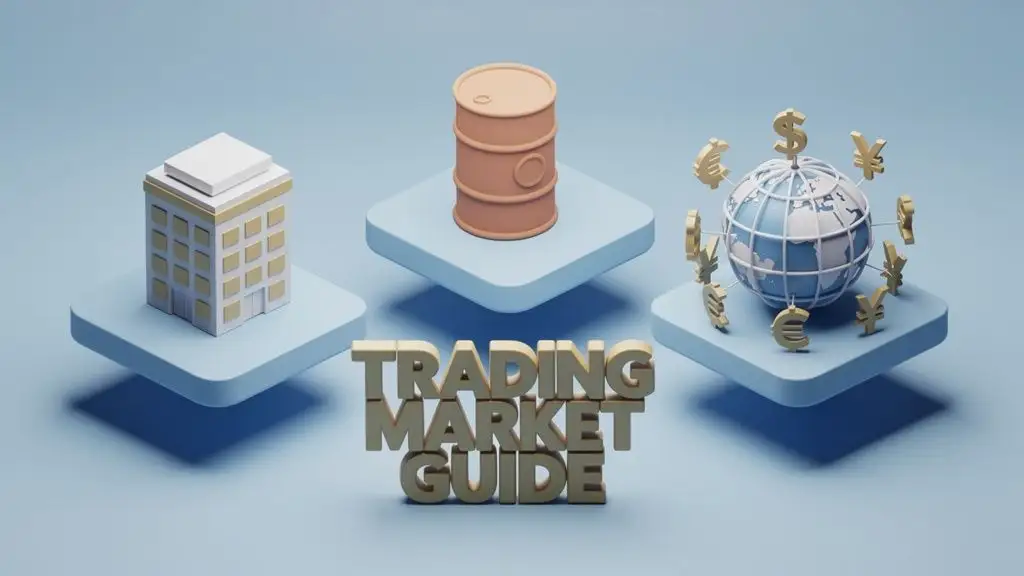
You’ve probably seen the screenshots on social media. Someone turns $500 into $5,000 in a single morning, and suddenly everyone wants to be a trader. But here is the cold reality: trading isn’t a single game. It’s a collection of different battlefields, and if you bring a knife to a gunfight, you’re going to lose your capital.
WikiFXWikiFXWikiFXWikiFXWikiFXWikiFXWikiFXWikiFXWikiFXWikiFX