

Global Broker Regulation Inquiry App
About WikiFX
English
简体中文
繁體中文
English
Pусский
日本語
ภาษาไทย
Tiếng Việt
Bahasa Indonesia
Español
हिन्दी
Filippiiniläinen
Français
Deutsch
Português
Türkçe
한국어
العربية
اردو


JGB Market Stabilizes After 'Truss Moment' Scare, But Rate Hike Bets Surge

WikiFX
|


Abstract:Japanese Government Bonds experience their most chaotic volatility in years, drawing comparisons to the UK's 'Truss Moment.' Major banks intervene to stabilize yields, but pressure mounts on the BOJ to accelerate rate hikes.
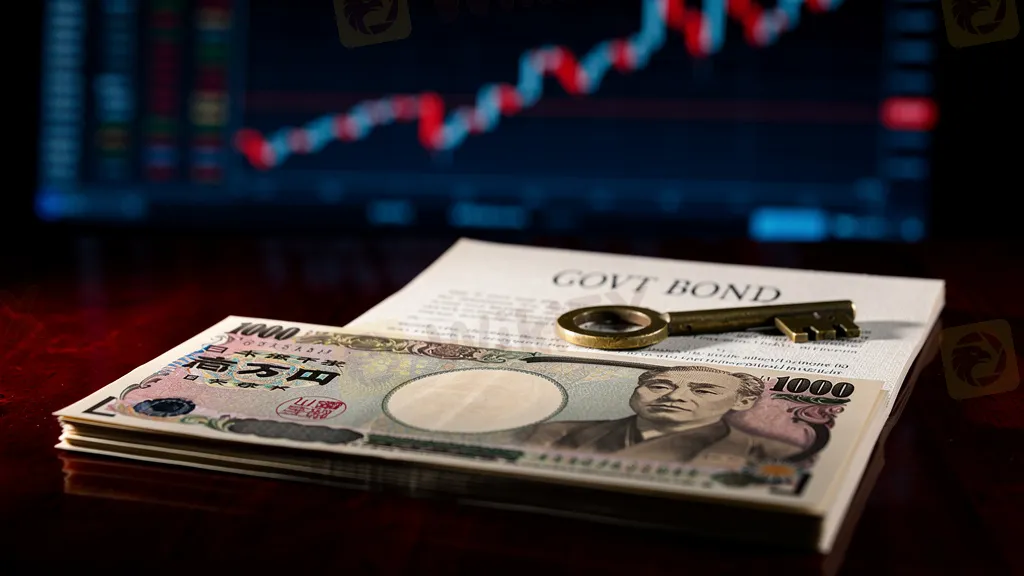
The Japanese Government Bond (JGB) market is recovering from a historic sell-off that sent tremors through global fixed-income desks. Triggered by fiscal expansion fears and shifting Bank of Japan (BOJ) policy, the 40-year JGB yield briefly breached 4.2%, marking its highest level in nearly two decades.
Institutional Circuit Breakers
The rout was stemmed as Sumitomo Mitsui Financial Group (SMFG) announced plans to double its domestic bond portfolio. Arihiro Nagata, SMFGs head of global markets, noted that compared to foreign bonds, JGBs offer a superior risk-reward profile at these levels, signaling a significant repatriation of capital by Japanese megabanks.
Key Market Data
- Yield Spike: 40-year JGB yield touched 4.2%.
- Forecast: Strategists predict up to three rate hikes by the BOJ this year.
- Currency risk: Potential violent reversal in USD/JPY if policy divergence narrows.
The BOJ's Dilemma
Market dislocation has altered the Bank of Japan's path. The sharp depreciation of the Yen—exacerbated by US economic strength—is forcing the BOJ into a corner, necessitating defensive hikes.
If the US Federal Reserve cuts rates while the BOJ tightens, the narrowing yield differential could trigger a reversal in USD/JPY. Conversely, unanchored Japanese yields could push US Treasury yields higher as Japanese investors offload US treasuries to cover domestic margin calls.
Disclaimer:
The views in this article only represent the author's personal views, and do not constitute investment advice on this platform. This platform does not guarantee the accuracy, completeness and timeliness of the information in the article, and will not be liable for any loss caused by the use of or reliance on the information in the article.
WikiFX Broker
Latest News
CMC Markets Extends US Share Trading Into Overnight Session
WikiFXSilver Forecast: XAG/USD rebound capped as bearish bias holds
WikiFXUK Chancellor Healey: Economy demonstrates welcome resilience despite global uncertainty
WikiFXUnited States Dollar Index holds onto gains above 99 ahead of US CPI data
WikiFXProp Firm FTMO to Acquire OANDA with $422 Million
WikiFXKudotrade Review 2026: Reported Slippage & Trade Execution Issues You Should Know
WikiFX11.09.26 Daily Forecast
WikiFXRBI's Record $136-Billion NRI Deposit Campaign: Closed Early, Windfall and Risks for Traders
WikiFXWhat is Synthetic Indices in Prop Trading | Why Is It Risky?
WikiFXRegistration for the 2026 WikiFX Golden Insight Award is now open!
WikiFX