

Global Broker Regulation Inquiry App
About WikiFX
English
简体中文
繁體中文
English
Pусский
日本語
ภาษาไทย
Tiếng Việt
Bahasa Indonesia
Español
हिन्दी
Filippiiniläinen
Français
Deutsch
Português
Türkçe
한국어
العربية
اردو


'Takaichi Shock' Triggers JGB Meltdown: Yen Plummets as 40-Year Yields Breach 4%

WikiFX
|


Abstract:Japanese government bond yields have surged to multi-decade highs following Prime Minister Sanae Takaichi's aggressive fiscal stimulus plans, sparking fears of a sovereign debt crisis similar to the UK's 2022 'Truss Shock'. The Bank of Japan is now trapped between stabilizing the bond market and defending a rapidly depreciating Yen, with global markets bracing for a potential unwind of the yen carry trade.
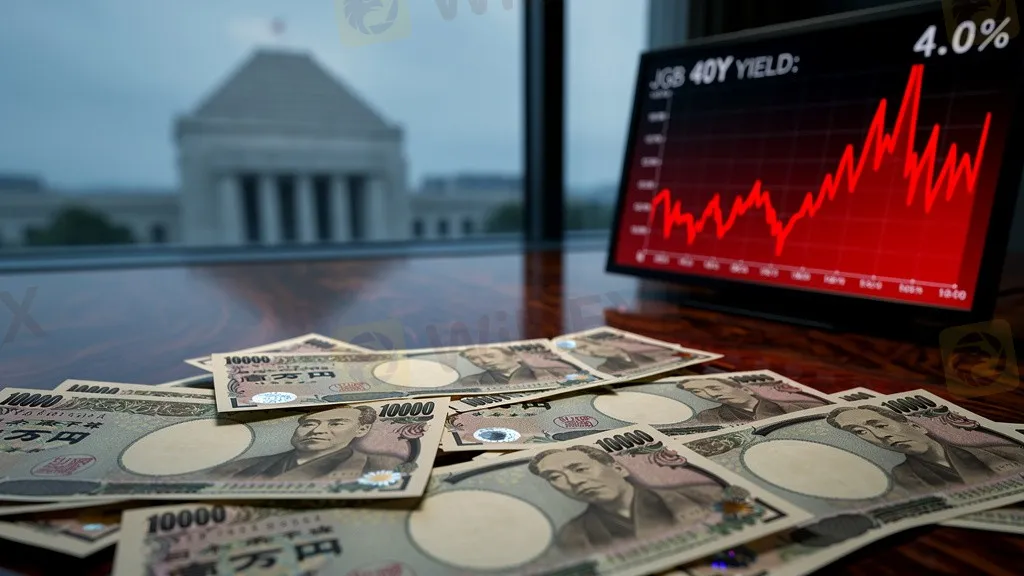
TOKYO — Japan‘s sovereign bond market, long conditioned by decades of ultra-loose monetary policy, is facing an unprecedented reckoning. On January 20, the yield on 40-yearJapanese Government Bonds (JGB) pierced the psychological 4.0% threshold for the first time since 2007. The move signals a violent repricing of Japan’s fiscal risk profile, drawing uncomfortable parallels to the UKs 2022 gilt crisis.
The catalyst for the sell-off is the aggressive fiscal expansion proposed by Prime Minister Sanae Takaichi. Dubbed the “High-ichi Shock” by traders, the administration's plan to combine massive spending with a proposal to slash food consumption tax to zero has shattered market confidence in Japan's fiscal discipline.
The Fiscal-Monetary Trap
The sell-off reflects a “sovereign risk premium” being priced into the Yen. Historically, higher JGB yields attracted capital, strengthening the currency. However, that correlation has inverted. Since mid-2025, the widening spread between US and Japanese rates has failed to support the Yen; instead, yields are rising alongside a collapsing currency.
With Japans debt-to-GDP ratio standing at a staggering 237% (IMF estimates), the market is demanding higher compensation. The Bank of Japan (BoJ) is now backed into a corner:
- Defend the Bond Market: Governor Kazuo Ueda has hinted at “flexible bond buying” to cap yields, effectively restarting QE-lite.
- Defend the Yen: Printing money to buy bonds dilutes the currency further, exacerbating import inflation and accelerating the JPY sell-off.
Liquidity Evaporates
The structural integrity of the JGB market is also in question. Since the BoJ ended its Negative Interest Rate Policy (NIRP) and Yield Curve Control (YCC) in March 2024, it has stepped back as the buyer of last resort.
- Foreign Investors: Remain focused on short-term T-Bills, ignoring long-duration bonds.
- Domestic Institutions: Life insurers, sitting on massive unrealized losses caused by the rate spike, are hesitant strategies.
Liquidity has thinned to dangerous levels, with ultra-long bond turnover dropping to just $280 million on the day of the spike. This vacuum amplifies volatility.
Global Contagion Risk
The ramifications extend far beyond Tokyo. A sustained spike in JGB yields compresses the spread used in the infamous Yen Carry Trade. If Japanese institutions repatriate funds, a liquidation of global assets—including US Treasuries and European sovereign debt—could follow. Analysts warn this may be the start of a global sovereign debt repricing cycle in 2026.
Disclaimer:
The views in this article only represent the author's personal views, and do not constitute investment advice on this platform. This platform does not guarantee the accuracy, completeness and timeliness of the information in the article, and will not be liable for any loss caused by the use of or reliance on the information in the article.
WikiFX Broker
Latest News
Why FOMO Hurts Your Trading Decisions (And How to Spot it)
WikiFXSaracenMarkets Review 2026: Regulation, High Leverage, and Mixed User Signals
WikiFXFOMO in Forex: Why a Missed Move Feels Like a Real Loss
WikiFXHF Market Review: A CySEC Clone Warning and an Unreachable Website
WikiFXFIX API Forex in 2026: The Broker Integration Questions That Matter After the Connection is Live
WikiFXBRAC EPL Review 2026: A Major Dhaka Stockbroker with a 2.06 WikiFX Score and No Recorded Regulation
WikiFXEMIRAX MARKETS Review: Withdrawal Blocks, Suspended Login Access, and a High-Risk Broker Warning
WikiFXTreasury Buybacks Alter Dollar Liquidity Flows
WikiFXWhat Your Trading Journal Really Reveals About Your Behaviour
WikiFXBangladesh Caps Cash Dollar at Tk126.50 to Calm Kerb Market
WikiFX