Abstract:Is Evest a real trading company, or are the rumors about an "Evest scam" actually true? For anyone thinking about using this broker, this is the most important question to answer. However, the answer isn't simply YES or NO. When we look at all the available information, we find a complicated situation. While the broker does have some official approval to operate, there are serious warning signs that any potential investor needs to carefully examine before exposing capital to risks. The safety of your money and honest trading practices are extremely important, and these are exactly the issues causing controversy around Evest.
This article isn't trying to sell you anything or make unfair accusations. Our goal is to examine the factual information available on independent checking websites such as WikiFX. We will give you a clear, evidence-based look at Evest's official status, what users have reported about their experiences, and the trading conditions it offers. By presenting the facts
The Main Question: Can You Trust Evest?
Is Evest a real trading company, or are the rumors about an “Evest scam” actually true? For anyone thinking about using this broker, this is the most important question to answer. However, the answer isn't simply YES or NO. When we look at all the available information, we find a complicated situation. While the broker does have some official approval to operate, there are serious warning signs that any potential investor needs to carefully examine before exposing capital to risks. The safety of your money and honest trading practices are extremely important, and these are exactly the issues causing controversy around Evest.
This article isn't trying to sell you anything or make unfair accusations. Our goal is to examine the factual information available on independent checking websites such as WikiFX. We will give you a clear, evidence-based look at Evest's official status, what users have reported about their experiences, and the trading conditions it offers. By presenting the facts, we want to help you, the trader, make a fully informed and safe decision for yourself. Let's start our investigation.
Evest: Important Facts and Warning Signs
To start our evaluation, we need a broad overview. This big-picture view, taken directly from the detailed WikiFX database, compares Evest's official information with the important alerts and facts that raise immediate concerns. This summary gives you a quick look at the main problems.
A history of 5-10 years might normally suggest a stable business. However, when combined with a low WikiFX score, a high-risk alert, and a dual-regulation approach that includes a weak offshore license, it tells a different story. This combination of facts suggests that while the broker has been operating, it has built up a history of problems that require much closer examination. The initial information doesn't build confidence; it calls for deeper investigation.
This information provides a starting point. To see the full, interactive report and check these details yourself, you can search for “Evest” on the WikiFX website at any time.
Understanding Evest's Official Approval
A broker's legitimacy is fundamentally connected to its regulation. This cannot be compromised. Evest presents a classic “regulation puzzle” by holding two very different types of licenses. Understanding the difference between them is essential for traders to evaluate the real level of protection they might receive.
The Credible License: FSCA
Evest holds a license (`36060`) from South Africa's Financial Sector Conduct Authority (FSCA). The FSCA is a respected and legitimate regulatory organization. This license provides a basic level of credibility and shows that the broker has met certain operational standards required in that area. For traders based in South Africa and potentially covered by this organization, there is an official body for oversight and dispute resolution. This is the positive side of Evest's regulatory situation. However, this is only half the story, and for most international clients, it may not be the relevant half.
The Offshore Red Flag: VFSC
Along with its South African license, Evest is also regulated by the Vanuatu Financial Services Commission (VFSC) under license number `17910`. This is where the main concern lies. “Offshore regulation” is a term that should immediately alert any trader. Regulators, such as the VFSC, are known for having much lower capital requirements, weaker enforcement methods, and minimal, if any, investor protection programs. Brokers often get these licenses because they are easier and cheaper to obtain and don't require following the strict standards of top-level authorities such as the UK's FCA, Australia's ASIC, or CySEC in Europe. The VFSC license offers the appearance of regulation without the substance of genuine protection.
Why This Combination is Worrying
So why would a broker hold both a credible and a weak license? This dual-license approach is a common tactic that raises red flags. Reputable brokers who are serious about global trust focus on obtaining multiple strong, top-level licenses. The reliance on an offshore license alongside a mid-level one is often a strategy to sign up international clients under the weaker regulatory umbrella.
For a trader, the key question becomes: *Under which regulation will my account be opened?* More often than not, clients from outside South Africa will be registered under the Vanuatu organization. This means that even though the broker advertises its FSCA license, those international clients are not protected by it. Their funds, trading activity, and any potential disputes fall under the weak authority of the VFSC, effectively removing the protection of the stronger license. This strategic confusion is a significant risk.
Voice of the Trader: Complaints
Theoretical risks about regulation become real when we examine user experiences. The “experience” and “authority” parts of any broker review come from the collective voice of its clients. WikiFX is clear in its warning: “WikiFX has received a total of eight user complaints against this broker, please be aware of the risks and do not be scammed!” These are not minor complaints; they form clear, thematic patterns of serious accusations.
Pattern 1: Aggressive Pressure to Deposit Capital
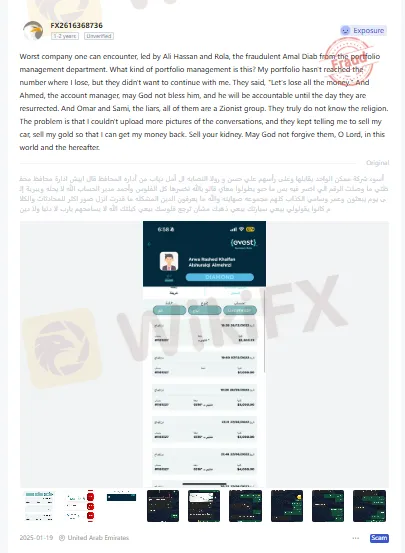
A consistent theme across multiple complaints is the report of extreme and aggressive pressure from account managers to deposit more funds. This goes far beyond standard sales tactics. Users describe a relentless push to increase their investment, often with manipulative promises. One user from the United Arab Emirates, in a complaint from January 2025, detailed how account managers told them to “sell your car, sell your gold” and even “sell your kidney” to fund their account and chase losses. This type of high-pressure behavior is a sign of predatory operations, not legitimate financial advisories. The goal appears to be maximizing client deposits, regardless of the client's financial well-being or risk tolerance.
Pattern 2: Withdrawal Problems
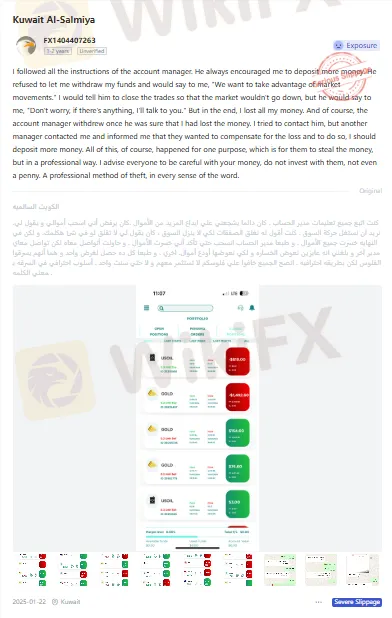
Perhaps the most alarming pattern is the recurring difficulty or outright refusal to process withdrawals. The ability to access your own funds is the most fundamental test of a broker's legitimacy. A complaint from a user in Kuwait, dated January 2025, provides a frightening example. The user states they followed all instructions from their account manager. When they tried to withdraw funds, the manager refused, stating, “We want to take advantage of market movements.” The user's request to close trades to protect capital was ignored. Ultimately, the client lost all their funds.
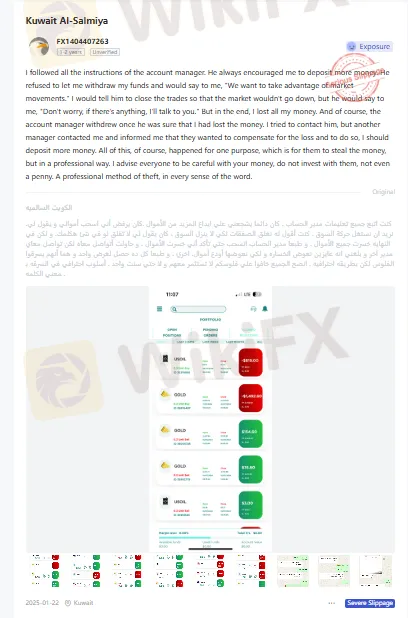
This suggests that funds are being actively held in the system against the client's will, a massive red flag that points toward a potential scam.
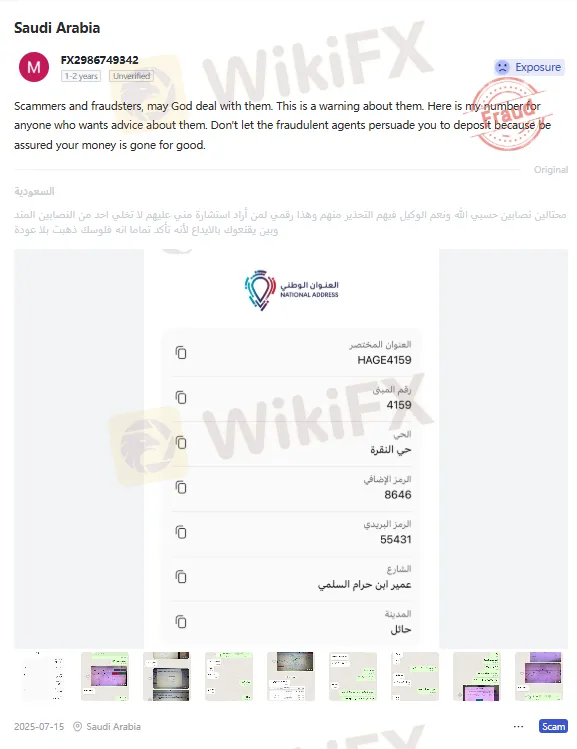
Another user from Saudi Arabia simply warns, “Don't let the fraudulent agents persuade you to deposit because be assured your money is gone for good.”
Pattern 3: Manager Misconduct Accusations
The third pattern involves direct accusations of account manager misconduct leading to financial loss. The same Kuwaiti user who was blocked from withdrawing funds goes on to describe what happened next. After the total loss, the account manager “withdrew once he was sure that I had lost the money.” The manager then became unreachable. Shortly after, a new manager contacted the client, not to resolve the issue, but to ask for more deposits under the pretense of “compensating for the loss.” This cycle of loss followed by a pitch for more money is a classic predatory tactic. It suggests a coordinated strategy where managers may not be acting in the client's best interest but are instead facilitating a system that benefits the broker at the client's expense.
These are just summaries of the accusations. We strongly encourage you to read the full, detailed user exposure reports on WikiFX to understand the severity and consistency of these claims. Seeing them for yourself is a crucial step in your research.
Evest's Trading Conditions and Fees
Beyond regulation and user reviews, the practical aspects of trading with a broker—its platform and cost structure—provide further insight into its legitimacy and competitiveness. An analysis of Evest's offerings reveals several areas where it differs significantly from industry norms, and not in a positive way for the trader.
Platform: A Major Disadvantage
One of the most notable disadvantages is Evest's trading platform. The broker does not offer MetaTrader 4 (MT4) or MetaTrader 5 (MT5). Instead, it relies on its own proprietary web and mobile platform. While a proprietary platform is not inherently bad, the absence of MT4/MT5 is a major disadvantage.
MT4 and MT5 are the undisputed industry standards. They are known for their strong charting tools, extensive libraries of indicators, support for automated trading via Expert Advisors (EAs), and, most importantly, their transparency. When using a third-party platform like MetaTrader, a broker has less ability to manipulate the trading environment. A proprietary platform, on the other hand, can be a “black box.” It offers less transparency, can lack advanced features, and may be designed in a way that benefits the broker over the trader. For serious traders, the lack of MT4/MT5 is a significant reason to be cautious.
Trading Costs: Fees and Spreads
A broker's fee structure directly impacts a trader's profitability. Evest's combination of fees and spreads is not competitive when compared to leading brokers in the industry.
When you combine a relatively high minimum deposit with non-competitive spreads, an aggressive inactivity fee and a costly conversion fee, the overall cost of trading with Evest becomes very high. This structure can make it difficult for even successful traders to achieve profitability, as a significant portion of their gains can be consumed by the broker's various fees.
Conclusion: The Final Decision
We return to our initial question: Is Evest legit? After a thorough, data-driven review, the verdict is clear.
On one hand, Evest is a technically regulated organization. The presence of a license from South Africa's FSCA prevents it from being classified as a completely unlicensed operation. This is the single, thin thread of legitimacy.
However, this one positive is overwhelmingly outweighed by a mountain of negatives. The reliance on a weak offshore VFSC license for international clients, the alarmingly low WikiFX score, and the consistent, severe patterns of user complaints are massive red flags. The accusations documented on verification platforms like WikiFX—regarding aggressive pressure to deposit, blocked withdrawals, and manipulative account manager conduct—paint a picture of a business model that may not align with the best interests of its clients. Added to this are the non-competitive trading conditions, including high fees and the absence of industry-standard platforms like MT4/MT5.
Therefore, while Evest may be “regulated” on paper, the sheer volume of evidence suggests it operates as a very high-risk broker. The risks to your capital appear to be substantial.
The decision to invest is ultimately yours, but it must be based on thorough and impartial research.
Before you deposit a single dollar with *any* brokers, including Evest, your first step should always be to use an independent verification tool. We strongly urge you to visit the new WikiFX app, search for the broker in question, and carefully review its regulatory status, risk alerts, and, most importantly, the unfiltered reviews from other traders. The complete Evest report that formed the basis of this analysis is available there and is an essential resource for your safety. Download the app now.