

Global Broker Regulation Inquiry App
About WikiFX
English
简体中文
繁體中文
English
Pусский
日本語
ภาษาไทย
Tiếng Việt
Bahasa Indonesia
Español
हिन्दी
Filippiiniläinen
Français
Deutsch
Português
Türkçe
한국어
العربية
اردو


EC Markets Review: Regulation, Licences and WikiScore Analysis

WikiFX
|


Abstract:This EC Markets review provides a detailed analysis of the broker’s regulatory framework, licensing coverage, and overall standing based on WikiFX’s evaluation.

This EC Markets review provides a detailed analysis of the brokers regulatory framework, licensing coverage, and overall standing based on information available on WikiFX. As a global broker regulatory query platform, WikiFX evaluates brokers using measurable criteria such as regulatory authorisation, compliance history, and operational transparency.
According to WikiFX, the EC Markets broker holds a WikiScore of 9.24 out of 10, placing it within a high tier among global brokers. This score reflects extensive regulatory coverage and a structured compliance framework across multiple jurisdictions. For traders, examining the brokers licences and the authorities behind them is essential in understanding the level of oversight and investor protection in place.
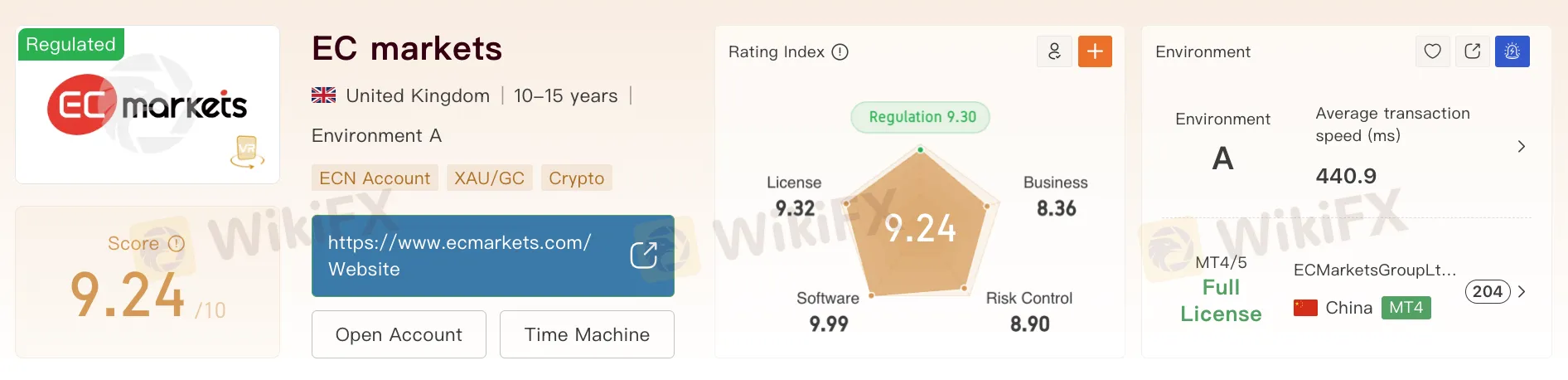
View WikiFXs full review on EC Markets here: https://www.wikifx.com/en/dealer/2001150169.html
EC Markets operates under several regulatory authorities, including the Australia Securities and Investment Commission, the United Kingdom Financial Conduct Authority, the New Zealand Financial Markets Authority, the South Africa Financial Sector Conduct Authority, and the Seychelles Financial Services Authority. These licences collectively form the foundation of EC Markets regulation, supporting its presence across major and offshore financial markets.
Australia Securities and Investment Commission
EC Markets is authorised by the Australia Securities and Investment Commission under a Market Making Licence with licence number 414198. ASIC is one of the most recognised financial regulators globally and is responsible for overseeing financial markets, investment firms, and service providers in Australia.
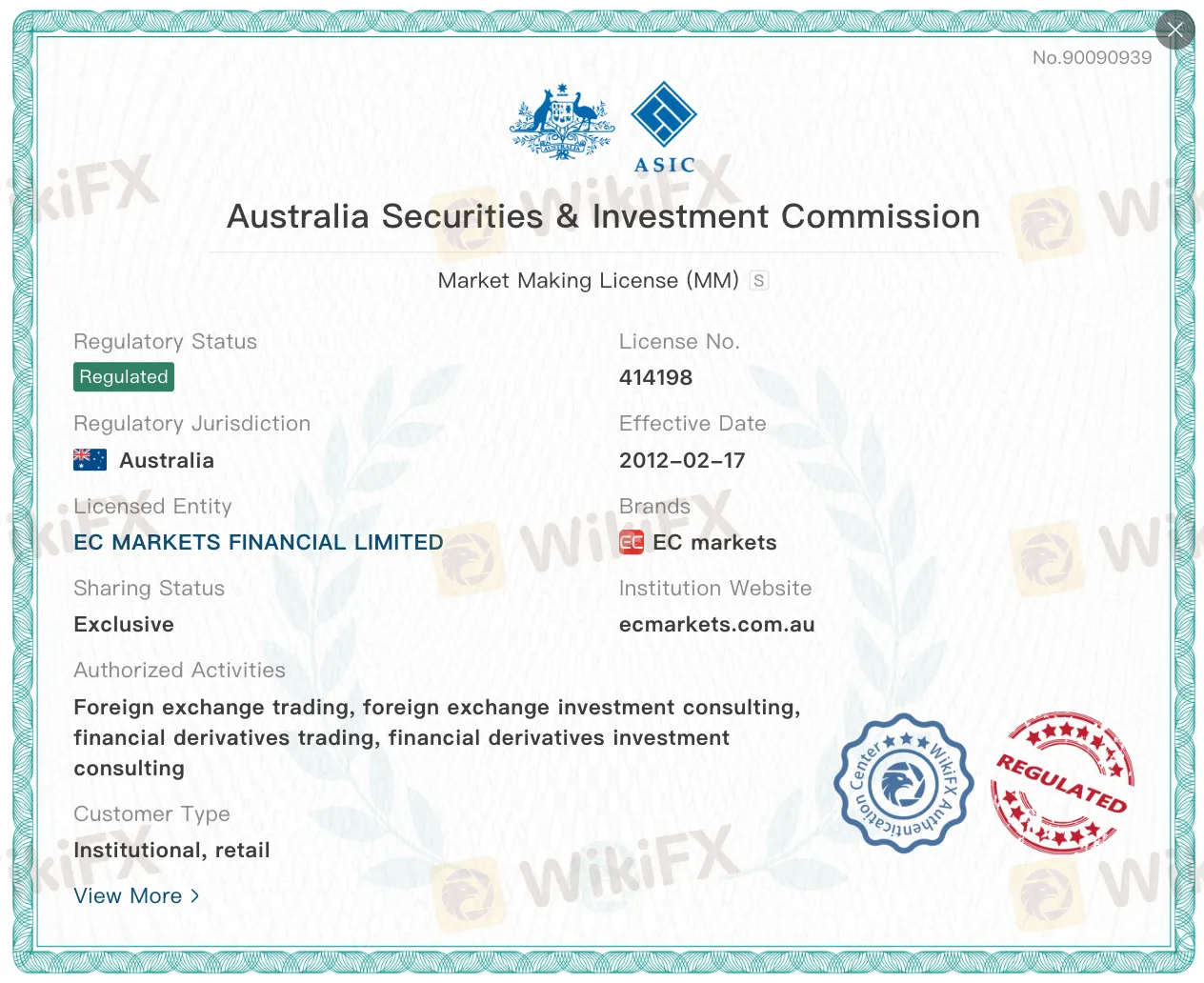
ASIC regulated firms must comply with strict requirements, including capital adequacy standards, financial reporting obligations, and client fund segregation. The regulator emphasises transparency and enforces conduct of business rules designed to protect investors.
From EC Markets‘ regulation perspective, the ASIC licence represents a significant component of the broker’s regulatory profile, indicating compliance with a well established and widely respected authority.
Financial Conduct Authority of the United Kingdom
In the United Kingdom, EC Markets is authorised by the Financial Conduct Authority under a Market Making Licence with licence number 571881. The FCA is known for its stringent regulatory standards and strong focus on consumer protection.
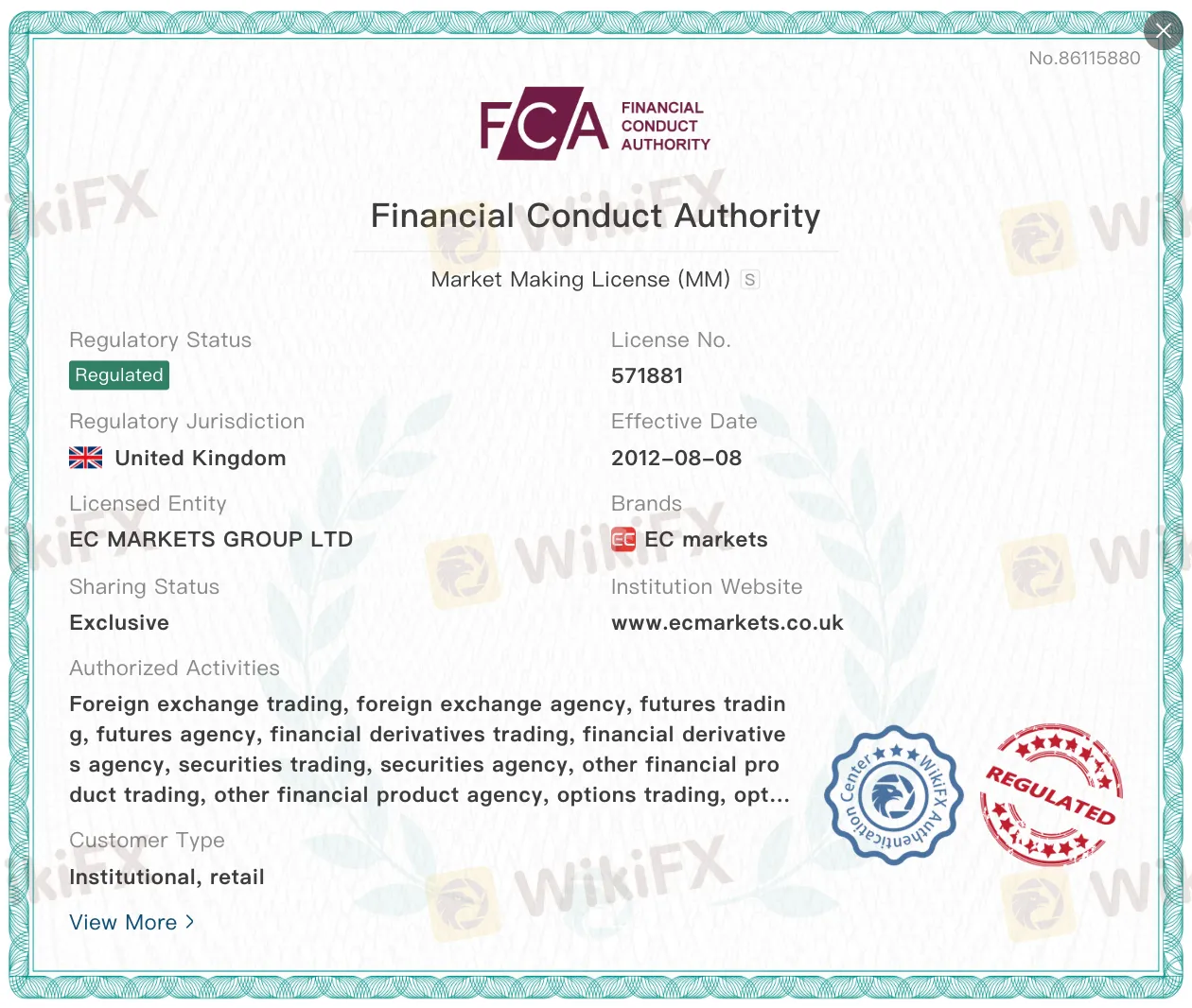
Firms regulated by the FCA must adhere to comprehensive rules regarding capital requirements, operational transparency, and client asset protection. The FCA also enforces strict conduct standards and provides access to dispute resolution mechanisms.
The presence of FCA regulation for EC Markets suggests that the broker operates under one of the most robust financial regulatory frameworks globally.
New Zealand Financial Markets Authority
EC Markets also holds a Market Making Licence issued by the New Zealand Financial Markets Authority with licence number 197465. The FMA oversees financial markets in New Zealand and is responsible for promoting fair, efficient, and transparent trading environments.
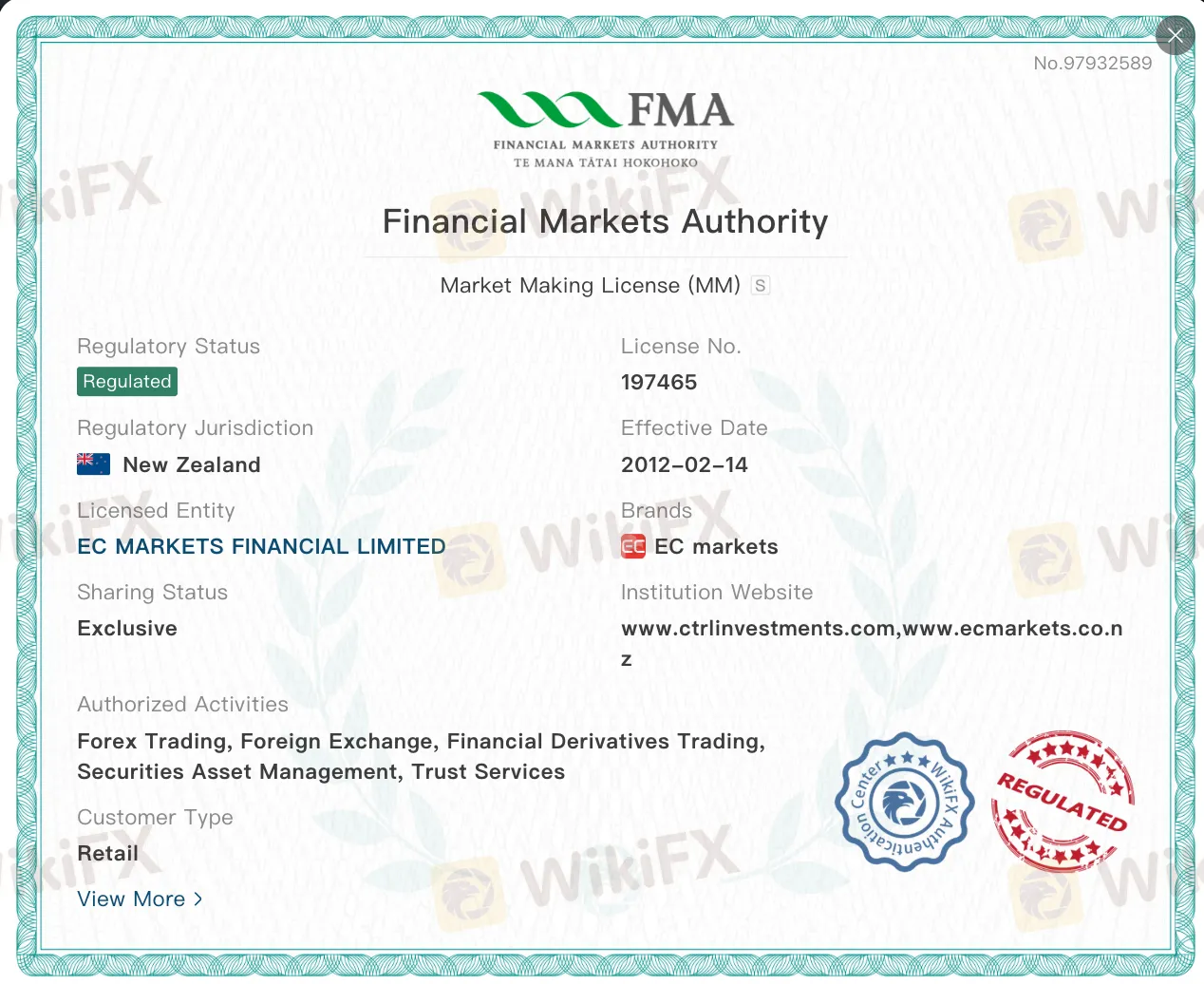
Licensed firms must meet regulatory requirements related to governance, financial reporting, and client protection. The inclusion of this licence expands the brokers regulatory reach within the Asia Pacific region.
From EC Markets‘ review standpoint, the FMA licence contributes to the broker’s multi jurisdictional regulatory coverage and supports its international operations.
Financial Sector Conduct Authority of South Africa
In Africa, EC Markets is authorised by the Financial Sector Conduct Authority under a Derivatives Trading Licence with licence number 51886. The FSCA supervises financial institutions in South Africa and aims to ensure fair treatment of customers and market integrity.
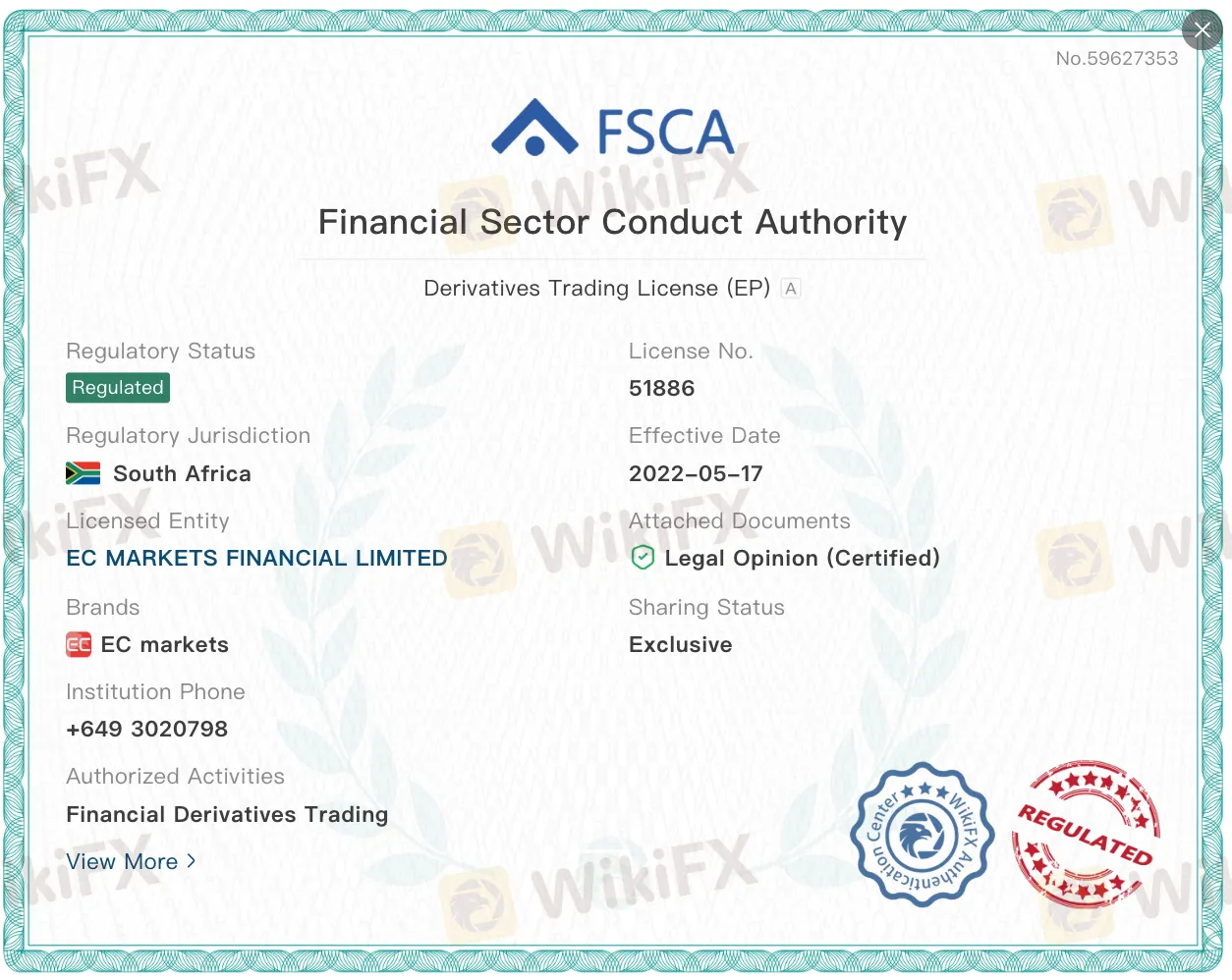
Firms regulated by the FSCA are required to comply with conduct of business standards, maintain financial records, and operate with transparency. This licence allows the broker EC Markets to serve clients within the South African market under regulatory oversight.
Seychelles Financial Services Authority
EC Markets also holds a Derivatives Trading Licence from the Seychelles Financial Services Authority with licence number SD009. The FSA regulates financial services providers incorporated in Seychelles, which is considered an offshore financial centre.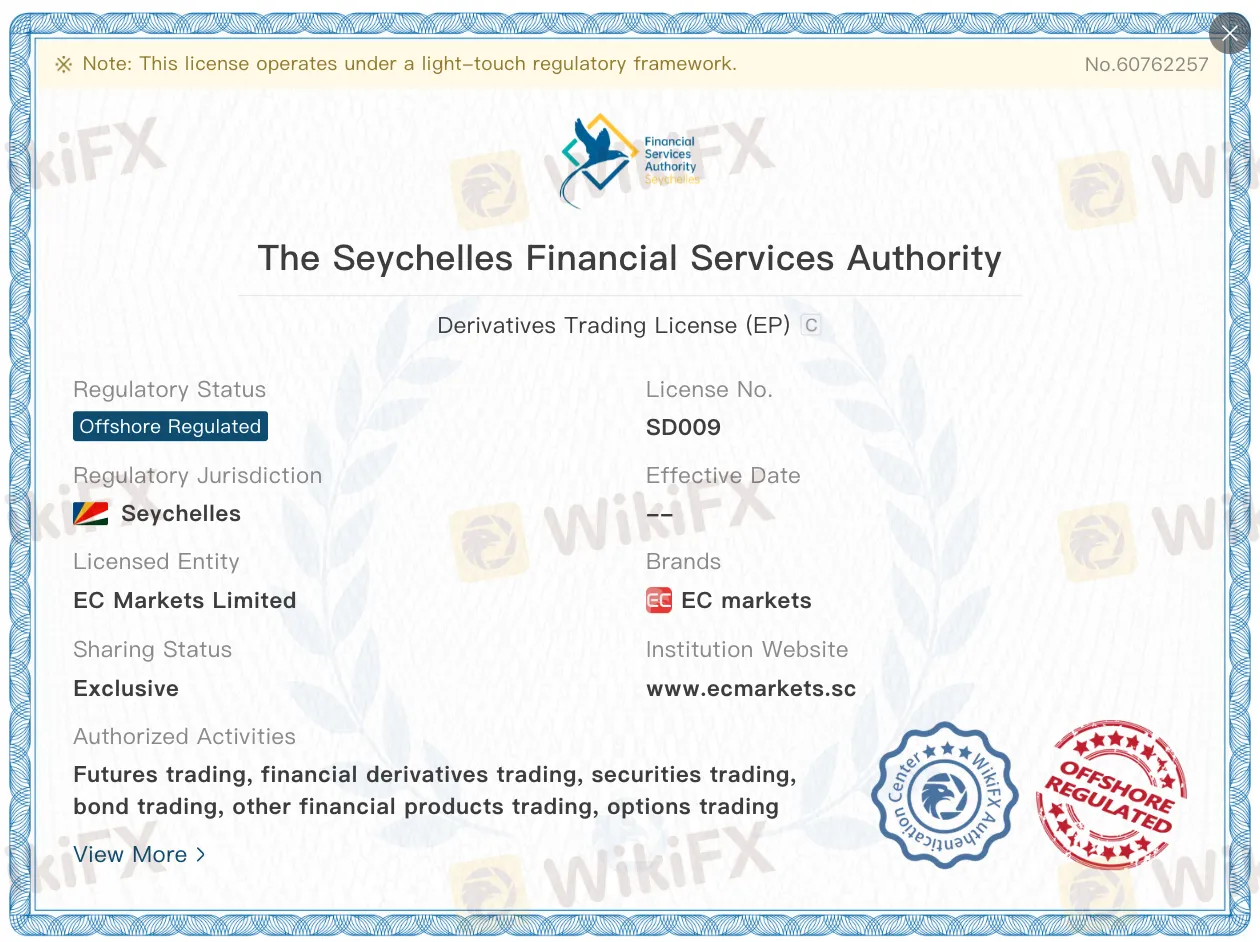
While offshore licences enable brokers to operate internationally, the regulatory framework may differ from that of major onshore authorities in terms of enforcement and investor protection mechanisms.
From EC Markets‘ regulation perspective, the Seychelles licence supports the broker’s global reach, though the level of oversight may vary compared with regulators such as the FCA or ASIC.
Multi Jurisdictional Regulation and Its Implications
EC Markets operates under a broad regulatory framework spanning multiple jurisdictions, including both major financial centres and offshore environments. This multi jurisdictional structure allows the broker to provide services across different regions while complying with various regulatory requirements.
However, regulatory standards are not uniform across all authorities. While regulators such as the FCA and ASIC are known for stringent oversight, offshore regulators may apply different standards. Clients may be onboarded under different entities depending on their location, which can affect the level of investor protection available.
From a review EC Markets perspective, understanding which entity governs a trading account is essential. Regulatory licences provide a framework for compliance and oversight, but they do not eliminate all risks associated with trading.
The Role of Regulation in Broker Assessment
Regulation is a fundamental aspect of broker evaluation, as it defines the standards and obligations under which a firm operates. Brokers with multiple licences from recognised authorities are generally required to meet higher levels of transparency and accountability.
The presence of licences from established regulators such as ASIC and the FCA can enhance confidence in a brokers operational structure. At the same time, traders should consider the jurisdiction of their account and the protections offered under that specific regulatory framework.
For those conducting a EC Markets review, the brokers extensive regulatory coverage contributes significantly to its high WikiScore and overall market standing.
Conclusion
This EC Markets review highlights a broker with a WikiScore of 9.24 out of 10 and a comprehensive regulatory framework spanning several major financial authorities. Licences from ASIC, the FCA, the FMA, the FSCA, and the Seychelles FSA demonstrate a wide regulatory footprint across global markets.
Overall, the EC Markets broker presents a well regulated profile supported by international licences. Traders are encouraged to consider both the regulatory authorities involved and the specific entity governing their account when evaluating EC Markets regulation and making informed trading decisions.

Disclaimer:
The views in this article only represent the author's personal views, and do not constitute investment advice on this platform. This platform does not guarantee the accuracy, completeness and timeliness of the information in the article, and will not be liable for any loss caused by the use of or reliance on the information in the article.
WikiFX Broker
Latest News
Rand firms as traders await key inflation read
WikiFXLQH Markets Review: Unregulated Broker With Growing Withdrawal Complaints
WikiFXNigeria's net FX flow falls 29% to $4.94bn in March
WikiFXWhy Fake Screenshots Make You Feel Like a Losing Trader
WikiFXDFSA Warns of Scam Impersonating Firm Menhir Capital
WikiFXInteractive Brokers changes overnight order default in TWS
WikiFXSri Lanka to Criminalize Unauthorized Forex Transfers
WikiFXDA finance chief steps aside over R4bn SARB forex probe
WikiFXSQUAREDFINANCIAL Review: Withdrawal Requests Go Unanswered as Clients Report Locked Accounts
WikiFXASIC Pulled 19,400 Scams as AI Deepfakes Target Investors
WikiFX