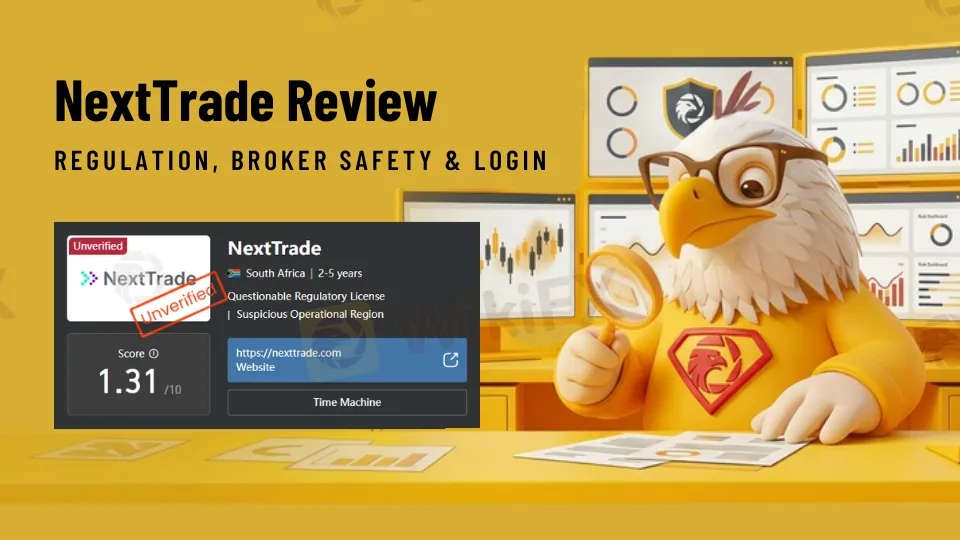
Abstract:Is NextTrade safe? Learn about regulation, fees, Forex trading, and login access. Read the full NextTrade broker review before you trade now!
 Contents
NextTrade Broker Review: Regulation, Safety, and What Traders Should Know
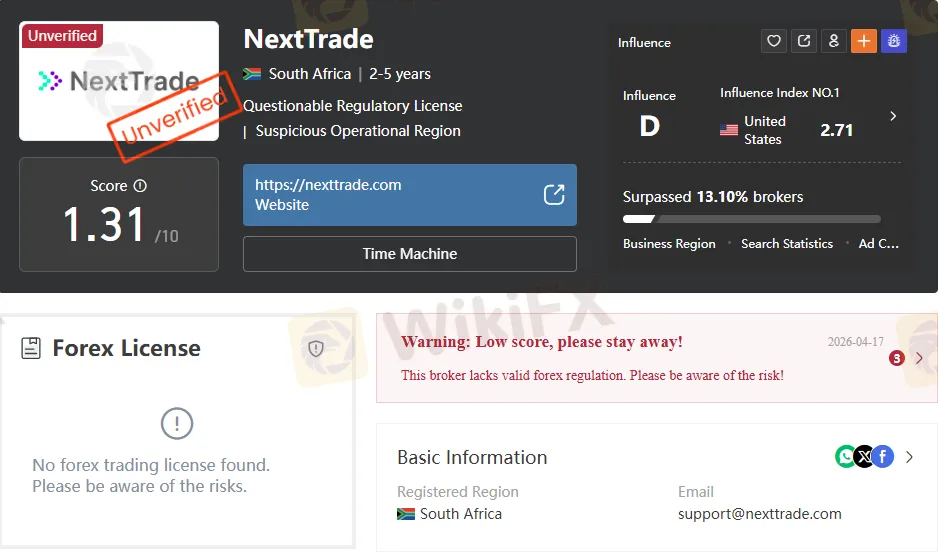
When evaluating any online trading platform, regulation and safety are the first factors traders should consider. In the case of NextTrade, understanding its regulatory status is essential before opening an account or depositing funds. According to data available on WikiFX, the NextTrade broker is associated with a regulatory license under the Financial Sector Conduct Authority (FSCA) in South Africa. However, the license status is flagged as “exceeded”, which indicates potential regulatory risk rather than full compliance.
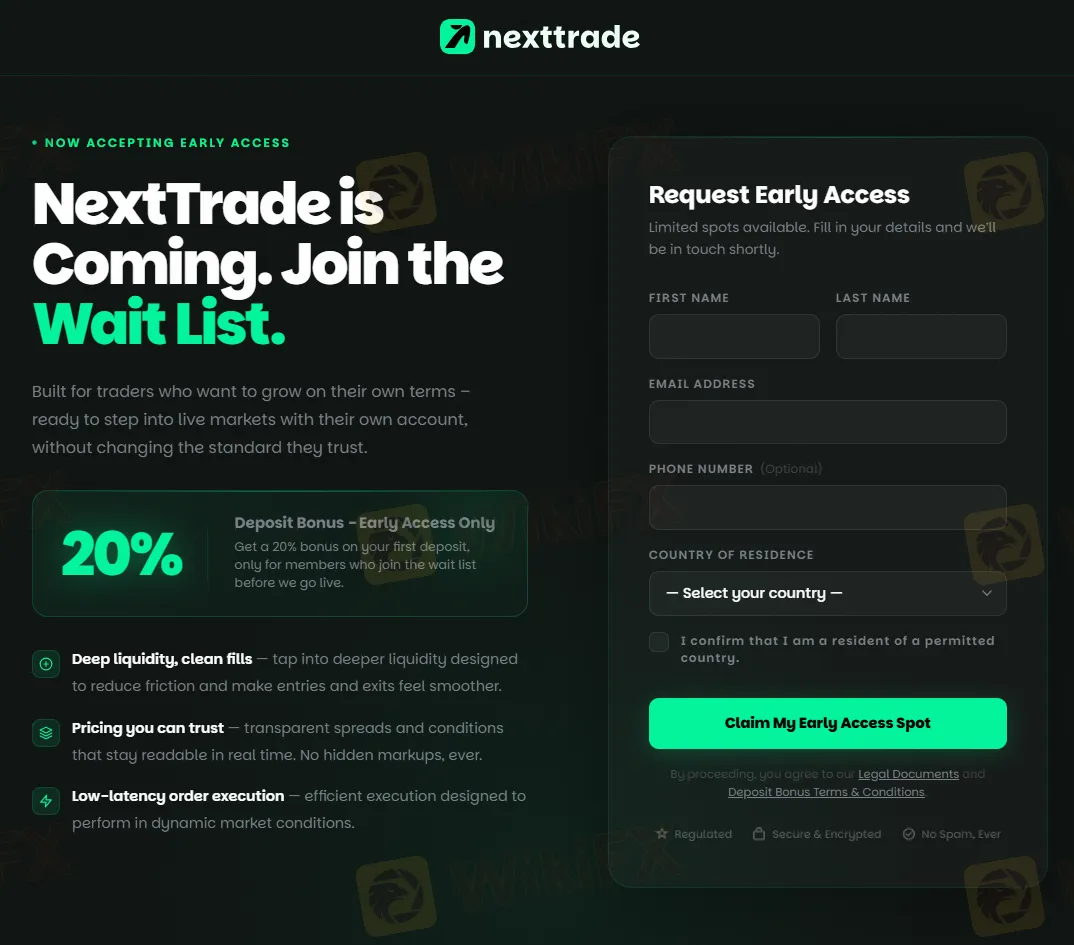
This means that while NextTrade regulation exists on record, its validity or scope may not fully cover the services being offered. For traders searching for regulation NextTrade or evaluating whether the platform is trustworthy, this is a critical warning sign. As a result, users should approach NextTrade Forex trading services with caution and verify all claims independently before proceeding.
What Is NextTrade and How Does the NextTrade Broker Work?
NextTrade operates as an online trading platform offering access to multiple financial markets through leveraged trading. As a NextTrade broker, it primarily targets retail traders looking to trade Contracts for Difference (CFDs) across various asset classes.
The platform functions by allowing users to speculate on price movements without owning the underlying assets. This includes Forex NextTrade trading, where users can trade currency pairs alongside other instruments. Like most CFD brokers, NextTrade generates revenue through spreads, commissions, or trading volume rather than direct asset ownership.
Who Owns NextTrade and Where Is the Broker Based?
The NextTrade broker is reportedly operated by Riza Financial (Pty) Ltd, a company registered in South Africa. Its association with the FSCA places it within a recognized financial jurisdiction; however, regulatory flags raised on WikiFX suggest that the operational scope may exceed what is officially permitted.
Understanding ownership is important when evaluating broker NextTrade, as it provides insight into accountability, jurisdiction, and dispute resolution pathways. Traders should always verify company registration details and cross-check them with official regulatory databases.
Is NextTrade Regulated and Is It Safe to Use?
The most important question for traders is whether NextTrade regulation ensures safety. Based on available data:
- The broker holds an FSCA license (South Africa) before
- The license is marked as “exceeded”, indicating potential misuse or overextension
- This raises concerns about whether client protections are fully enforced
For users searching regulation NextTrade, this means the broker cannot be considered fully secure compared to strictly regulated entities. Regulatory warnings like this often signal higher risk, especially in cases involving offshore operations or unclear compliance structures.
What Can You Trade on NextTrade Forex?
In terms of product offerings, NextTrade Forex trading is one of its core services. The platform provides access to a variety of markets, including:
- Forex pairs (major, minor, and exotic currencies)
- Commodities such as gold and oil
- Indices representing global stock markets
- Cryptocurrencies and other CFDs
This range allows traders to diversify portfolios under a single account. However, while Forex NextTrade offerings appear competitive, traders should weigh these features against the platforms regulatory concerns.
What Are the Spreads, Leverage, Fees, and Minimum Deposit on NextTrade?
The trading environment is another key factor in any NextTrade review. Based on available data:
- Minimum deposit: Starts from approximately $10
- Leverage: Up to 1:500 (high risk, high reward)
- Spreads: From around 0.1–0.4 pips depending on account type
- Fees: Likely embedded in spreads; commission structures may vary
High leverage is attractive for traders seeking larger market exposure, but it also significantly increases risk. When analyzing NextTrade Forex conditions, traders should consider whether these features align with their risk tolerance.
What Trading Platforms Does NextTrade Offer?
The NextTrade broker supports widely used trading platforms, including:
- MetaTrader 4 (MT4)
- MetaTrader 5 (MT5)
- TradeLocker (web-based platform)
These platforms provide essential tools such as charting, technical indicators, and automated trading capabilities. For traders familiar with MT4 or MT5, this adds a level of usability and accessibility to NextTrade Forex trading.
How Do You Register and Log In to a NextTrade Account?
To start trading, users need to complete registration and access their accounts through the NextTrade login system. The process typically includes:
- Signing up via the official website
- Verifying identity (KYC requirements)
- Funding the account
- Accessing the platform via MT4, MT5, or TradeLocker
For those searching login NextTrade, it is important to ensure that you are using the official website to avoid phishing or fraudulent portals. Always double-check URLs before entering login credentials.
What Are the Pros, Cons, and Final Verdict on NextTrade?
A balanced NextTrade review highlights both strengths and concerns:
Pros
- Low minimum deposit requirement
- Access to popular platforms (MT4/MT5)
- Wide range of tradable instruments
Cons
- Regulatory status flagged as “exceeded”
- Limited transparency compared to top-tier brokers
- Potential safety concerns for client funds
Conclusion: Is NextTrade Worth Considering?
In summary, NextTrade presents itself as a feature-rich trading platform with access to Forex, CFDs, and multiple markets, making it appealing to beginners and experienced traders alike. However, the most critical issue remains its regulatory status.
While NextTrade regulation exists on record, the “exceeded” flag significantly impacts its credibility. For traders evaluating broker NextTrade, this means that caution is necessary. It is advisable to prioritize brokers with fully valid and well-recognized regulatory licenses to ensure stronger investor protection.
Before proceeding with any deposits or trading activity, always conduct independent verification and consider the risks involved.