Abstract:A fresh Pune police probe has reportedly booked 57 people in connection with an alleged forex investment scam involving a trading platform. This India-focused report separates the allegation from confirmed regulatory rules, explains how fake trading app scams use social media, fabricated profits, third-party bank accounts and blocked withdrawals, and shows how investors can verify an online forex trading platform through RBI and SEBI resources. It also places the case within Pune's wider pattern of online investment fraud and provides an immediate response checklist, including the National Cyber Crime Reporting Portal and helpline 1930.

The number is large enough to stop a reader mid-scroll: 57 people have reportedly been booked as police examine a trading platform linked to an alleged forex investment scam. The more important question is what investors can verify before a convincing dashboard turns into a blocked withdrawal.
 Contents
Key Points
What is reported: The Indian Express reported on 4 August that 57 people were booked while a trading platform was being probed in an alleged forex investment scam. Booking is an investigative step. It is not a conviction.
What investors should do: Verify the operator, the app, the receiving bank account and the permitted transaction before paying. If money has already moved, contact the bank and report immediately through cybercrime.gov.in or helpline 1930.
A Fresh Case, and a Familiar Pattern
The Indian Express reported the new Pune investigation under the headline '57 booked as trading platform probed for forex investment scam'. The available report establishes the allegation and the number booked. This article does not name the platform because its identity and authorisation status were not independently confirmed through a regulator or court record.
That restraint matters. A police case can involve promoters, account holders, agents, technical operators, or other accused persons with different alleged roles. The number 57 does not mean 57 convictions. It means investigators believe there is enough material to register and examine specific allegations.
The wider signal is stronger than one headline. The Times of India reported that quick-profit online trading frauds had drained about ₹452 crore from Pune investors since 2024. That figure covers a broader category than forex scams, but it shows why fake investment platforms have become a major local risk.
Legal status box: Reported fact: 57 people were booked. Allegation: a trading platform was linked to a forex investment scam. Not established here: guilt, final loss, or the platform's regulatory status. Editors should preserve these distinctions in the headline, image and social copy.
How the Fake Trading App Trap is Built
India's cybercrime advisory describes a recurring path: sponsored advertisements or social-media messages lead victims into WhatsApp or Telegram groups. Fraudsters pose as experts, institutions, or investment communities. They provide an app link and direct payments to Indian bank accounts controlled by third parties.
SEBI's fake trading app explainer adds two critical stages. The app displays fabricated profits, which encourages larger deposits. When the investor requests a withdrawal, the platform invents taxes, release charges, or account errors. The screen balance may look real while the underlying trades never occurred.
Recent Pune cases show the same social engineering. A municipal clerk allegedly lost ₹26.2 lakh after a small early payout created trust. In another case, an IT professional allegedly lost ₹4.43 crore through a WhatsApp network and a fraudulent app. These are separate allegations, not proof that every platform uses the same script.
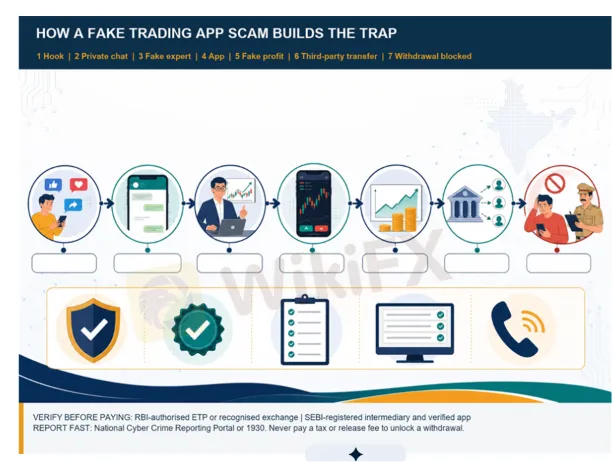
Figure 1. Fake profits are a persuasion tool; verify the operator and payment route before treating an app balance as money.
The Seven-stage Warning Table
Forex Legality in India: The Short Answer
RBI's forex FAQ says residents may transact only with authorised persons and for permitted purposes. Electronic forex transactions should use RBI-authorised electronic trading platforms or recognised exchanges, subject to the applicable rules. Sending margin to an overseas exchange under the Liberalised Remittance Scheme is not permitted.
RBI publishes an Alert List of entities not authorised to deal in forex or operate forex ETPs. The list is not exhaustive. Absence from the list does not prove authorisation. Investors must also check the positive list of authorised persons and platforms.
The positive list of RBI-authorised ETPs is available separately. This distinction is important when searching an online forex trading platform. A clean website, a foreign licence, or a missing alert-list entry is not a substitute for Indian authorisation.
RBI has also told banks to watch accounts used for unauthorised forex transactions. The circular describes local collection accounts used for margin, investment, and charges. That pattern explains why payments to unrelated individuals or trading firms are a high-risk signal.
RBI and SEBI Checks are Different
SEBI introduced a Verified label for stock trading apps on Google Play in March 2026. The regulator also promotes a 'check, validate, verify' approach. This measure applies to stock trading apps linked to SEBI-registered entities. It should not be misrepresented as RBI authorisation for a forex platform.
How to Spot a Forex Scammer Before Paying
Five red flags: Guaranteed returns; an APK or unverified app link; payment to a personal or unrelated account; pressure to borrow or add funds; and a tax, insurance, or release fee demanded before withdrawal.
SEO searches such as forex scams, forex scam list, and how to spot a forex scammer can help surface warnings. They can also surface copied reviews and paid promotions. The decisive evidence should come from regulator registers, bank beneficiary details, court or police records, and the platform's verified legal entity.
Common misconception: A successful small withdrawal does not prove legitimacy. Fraudsters may return a small amount to build confidence before requesting a much larger deposit. A dashboard balance is not cash until a regulated institution confirms the transaction and withdrawal.
If You Have Already Transferred Money
Stop sending funds, even if the platform claims one final payment will release everything. Do not install another remote-access app. Call the bank immediately and ask it to flag the transaction and beneficiary.
Report the incident through the National Cyber Crime Reporting Portal or call 1930. Preserve chat exports, phone numbers, app files, URLs, screenshots, UPI IDs, account numbers, transaction references, and the exact timeline. Fast reporting can improve the chance of tracing or freezing funds, but recovery is not guaranteed.
Illustrative scenario - not a real victim: An investor sees ₹12 lakh of profit in an app after depositing ₹4 lakh. The platform asks for ₹1.8 lakh in tax before withdrawal. The correct response is not another payment. It is to stop, verify the entity, contact the bank, preserve evidence, and report.
Final View: The App is Not the Evidence
The Pune case matters because it turns an abstract warning into an active investigation involving 57 booked persons. Yet the lesson is larger than one platform. Online forex trading platforms can copy professional design, price feeds, and account statements. What they cannot copy is valid Indian authorisation, a matching regulated beneficiary, and a verifiable transaction trail. Check those three before trusting the screen.
Editorial note: This article reports allegations and does not determine guilt. Platform names are withheld pending independent regulatory or court confirmation. The content is for education and information, not legal, investment, or trading advice.
Download the WikiFX app for the latest forex updates.
Interesting Articles for You
Fortex White Label in 2026: Can Your Liquidity Stack Scale Without Losing Control?
A Fortex white label can look like the fastest route to a modern branded trading environment, but a fast launch is not the same as a controlled launch. This 2026 broker guide explains what the Fortex platform is, where a Fortex broker solution can sit in a wider operating stack, and how to evaluate the difference between a white label, a server licence, and a connected CRM or Client Office setup. It also unpacks Fortex cost beyond the monthly headline, including implementation, integration, support, data, governance, migration, and exit assumptions. Use the practical questions, workflow tests, comparison table, and launch checklist to assess a Fortex provider without mistaking a feature demo for evidence that your brokerage can run the service safely at scale.
News
2026-08-03
Further Reading