


India Q1 FY27 GDP Growth Hits 7.8%: 3 Scenarios for INR and Gold
India's Q1 FY27 GDP grew 7.8%, beating a 7.4% poll and RBI's 7.0% projection. See three conditional scenarios for INR, rates and gold.
Original

简体中文
繁體中文
English
Pусский
日本語
ภาษาไทย
Tiếng Việt
Bahasa Indonesia
Español
हिन्दी
Filippiiniläinen
Français
Deutsch
Português
Türkçe
한국어
العربية
اردو




Abstract:You keep a record of everything you think and do prior to the transaction, during the deal, and following the trade. Whatever your trading approach or style, trading is a performance skill.

You keep a record of everything you think and do prior to the transaction, during the deal, and following the trade.
Whatever your trading approach or style, trading is a performance skill.
Your success depends on your ability to evaluate the market environment, develop a strategy or trading approach, execute that plan successfully, and be lucky.
Since there are several factors that contribute to success, you must list them all in order to assess your strengths and weaknesses.
What to Record in Your Professional Journal
For traders, that entails writing down:
Who you are and why you trade foreign exchange. You must understand who you are, your lifestyle concerns, and the reasons behind your actions in order to choose the best trading strategy for you.
viewpoints and philosophies of the market. By doing so, you can frame and comprehend the markets, decide how to behave, and control the danger to your account.
the market observations. Even while every day in the market is unique, you may still benefit from some “tendencies” or “behaviors.” You may identify these “tendencies” by diligent and persistent observation, and you can then develop methods around them. Additionally, you'll be aware of the situation and adapt as necessary if the surroundings changes.
trading lost opportunities and errors. The market moving against your trade is just as harmful to your performance as mistakes and lost chances. To prevent making the same errors again, you should keep track of your blunders in your diary. Examples include closing trades too soon, failing to act on legitimate setups, inputting the incorrect entry levels or position sizes, etc.
performance information. Your forex trading success may be measured into concrete statistics in many different ways. This presents a straightforward, accurate view of how you're doing. The stats are truthful, just like Shakira's hips. And occasionally, a dose of reality might give you the wake-up call you need to step up your game!
In all honesty, this seems like a lot.
So here is what we believe to be the absolute minimum to help you get started. Our list of essential components for a trading journal.
We just want to make clear that this is what we think should be in a trading strategy before we release our list.
We just offer this list so you may have a better sense of what to put in your own plan; you are not required to stick strictly to the items on it.
The Minimum: 5 Record-Keeping Requirements for Your Trading Journal
All right, here are the five components that any forex trading notebook “must-have” have:
Possibility of exchanging
Entry trigger Size Position
Trading regulations Trade retrospective
Again, it's your choice.
It serves as your trade diary.
You should personalize your trade notebook anyway you think fit, just like you would with your own Dota 2 character.
Keep in mind that keeping a forex trading notebook is for your own profit. So, make a note of what you believe would be most beneficial to you!

Disclaimer:
The views in this article only represent the author's personal views, and do not constitute investment advice on this platform. This platform does not guarantee the accuracy, completeness and timeliness of the information in the article, and will not be liable for any loss caused by the use of or reliance on the information in the article.
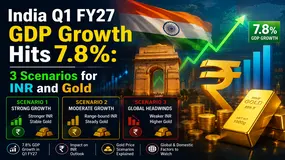
India's Q1 FY27 GDP grew 7.8%, beating a 7.4% poll and RBI's 7.0% projection. See three conditional scenarios for INR, rates and gold.
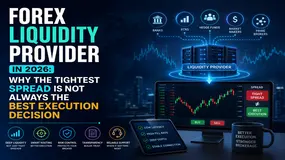
Choosing a forex liquidity provider is not a search for the lowest displayed spread or the longest provider list. It is a broker decision about pricing integrity, depth, routing, credit, reporting, incident response, and client communication. This 2026 guide explains how a forex LP, FX liquidity provider, or liquidity provider forex arrangement fits into a broker’s execution chain; what to test before onboarding; why a “best forex liquidity provider” claim cannot replace due diligence; and how to compare cost beyond commission. Use the execution-quality scorecard, provider questions, routing scenarios, and 90-day onboarding plan to assess whether a liquidity relationship can support your actual client mix, instruments, risk model, and jurisdiction. The goal is not to make a universal ranking. It is to build evidence that your broker can explain, supervise, reconcile, and recover its execution service when market conditions are difficult.
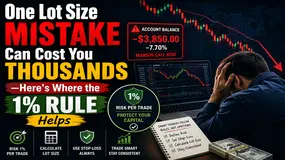
Switched from one trading strategy to another but could not avert heavy losses? Wondering what went wrong despite your market analysis being spot on? It may not be a strategic issue then. It may just be that you chose the wrong lot size. Yes, a single oversized position can get your account exposed to far greater risks than you may imagine. You may be moved by the impressive profits with increasing lot sizes. But by doing so, you also invite a proportionate rise in losses. This is where you need to apply the essential 1% risk management principle. This rule helps you assess how much you can afford to lose if a trade does not go as planned.
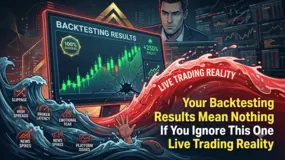
Backtesting remains one of the primary skills forex traders learn. By implementing a trading strategy based on historical currency pair price information, traders can view their past performance. The strategy leading to consistent profits during backtesting can raise confidence and lay a structured approach to the forex market. However, the path is not as simple as it may sound. Several traders tend to meet a harsh reality when transitioning to live trading. The strategy that seemed almost flawless on historical charts suddenly fails to deliver the results it did before. The sudden difference may not necessarily be because of a poor strategy. Rather, it indicates limitations concerning backtesting and several factors that play their part in a live market where conditions change frequently. It is thus important to understand these differences so that you can set realistic expectations and work on to achieve consistent success.
WikiFXWikiFXWikiFXWikiFXWikiFXWikiFXWikiFXWikiFXWikiFXWikiFX