


Moneta Markets Receives UAE Category 5 Licence
Moneta Global Financial Services LLC has received a Category 5 licence from the UAE Capital Market Authority, establishing a regulated structure for the company’s activities in the country.
Original

简体中文
繁體中文
English
Pусский
日本語
ภาษาไทย
Tiếng Việt
Bahasa Indonesia
Español
हिन्दी
Filippiiniläinen
Français
Deutsch
Português
Türkçe
한국어
العربية
اردو




Abstract:The Commodity Futures Trading Commission (CFTC) has initiated legal action against Aipu and Fidefx, alongside individual defendants Qian Bai, Lan Bai, and Chao Li, accusing them of fraudulently soliciting and misappropriating at least $3.6 million from 32 customers.

The Commodity Futures Trading Commission (CFTC) has initiated legal action against Aipu and Fidefx, alongside individual defendants Qian Bai, Lan Bai, and Chao Li, accusing them of fraudulently soliciting and misappropriating at least $3.6 million from 32 customers. The lawsuit alleges that the defendants orchestrated a fraudulent investment scheme, misleading investors under the guise of trading in commodities.
According to the CFTCs complaint, Qian Bai and Lan Bai, acting as controlling individuals of Aipu, alongside Fidefx and Li, worked as a coordinated group in defrauding investors. The defendants are said to have solicited funds from customers in the form of fiat currency and digital assets, offering agreements or contracts for trading commodities on a leveraged or margined basis. These transactions were reportedly marketed as involving off-exchange retail foreign currency contracts or commodity futures contracts.
The scheme involved customers being encouraged to fund supposed “trading accounts” with Aipu or Fidefx through their respective websites, which were nearly identical in design but operated under different names. The defendants' solicitors contacted customers through popular communication platforms such as WeChat, WhatsApp, and Line. These solicitors falsely claimed to have insider knowledge that could yield returns of 10% to 30% per trade in leveraged retail transactions, retail forex, or futures contracts. As part of the pitch, customers were told that they would receive tailored trading advice to ensure profitable trades.

Once customers deposited funds into their “trading accounts,” they were given access to online account statements purportedly showing deposits and successful trades made on their behalf. However, these account statements were entirely fabricated. Neither Aipu nor Fidefx held U.S.-based trading accounts or conducted any trades for customers. Instead, the defendants misappropriated all assets provided by customers, transferring the funds to offshore entities that were unrelated to any legitimate commodity trading activities.
The complaint further alleges that throughout the fraudulent operation, the defendants collaborated with solicitors to collect fiat and digital assets from customers, instructing them to transfer the funds into bank accounts and digital wallets under their control. These accounts were not managed by any CFTC-registered futures commission merchant or retail foreign currency dealer, as required by law. Instead of utilizing the funds for legitimate trades, the defendants diverted the money to offshore accounts controlled by individuals outside of the U.S.
The CFTCs legal action aims to hold the defendants accountable for their fraudulent conduct and recover the misappropriated funds. The case underscores the need for consumers to exercise caution when engaging in online trading platforms, particularly those that claim high returns with minimal risk. The ongoing investigation will focus on ensuring restitution for the affected customers.

Disclaimer:
The views in this article only represent the author's personal views, and do not constitute investment advice on this platform. This platform does not guarantee the accuracy, completeness and timeliness of the information in the article, and will not be liable for any loss caused by the use of or reliance on the information in the article.

Moneta Global Financial Services LLC has received a Category 5 licence from the UAE Capital Market Authority, establishing a regulated structure for the company’s activities in the country.
Did LMAX Group deny you withdrawals citing frozen funds at the wallet service provider’s end? Have you been so exhausted by the endless withdrawal hassles that you have begun to stop investing in the platform? Has this UK-based liquidity provider even questioned your fund ownership status when you requested withdrawals? You are not alone! Many users have complained about these issues while sharing their LMAX Group reviews.

A fresh Pune police probe has reportedly booked 57 people in connection with an alleged forex investment scam involving a trading platform. This India-focused report separates the allegation from confirmed regulatory rules, explains how fake trading app scams use social media, fabricated profits, third-party bank accounts and blocked withdrawals, and shows how investors can verify an online forex trading platform through RBI and SEBI resources. It also places the case within Pune's wider pattern of online investment fraud and provides an immediate response checklist, including the National Cyber Crime Reporting Portal and helpline 1930.
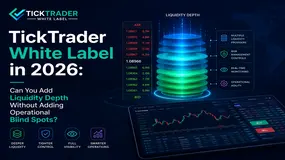
A TickTrader white label can look like the fastest route to a modern branded trading environment, but a fast launch is not the same as a controlled launch. This 2026 broker guide explains what the TickTrader platform is, where a Soft-FX broker solution can sit in a wider operating stack, and how to evaluate the difference between a white label, a server licence, and a connected CRM or Client Office setup. It also unpacks TickTrader cost beyond the monthly headline, including implementation, integration, support, data, governance, migration, and exit assumptions. Use the practical questions, workflow tests, comparison table, and launch checklist to assess a Soft-FX TickTrader provider without mistaking a feature demo for evidence that your brokerage can run the service safely at scale.
WikiFXWikiFXWikiFXWikiFXWikiFXWikiFXWikiFXWikiFXWikiFXWikiFX