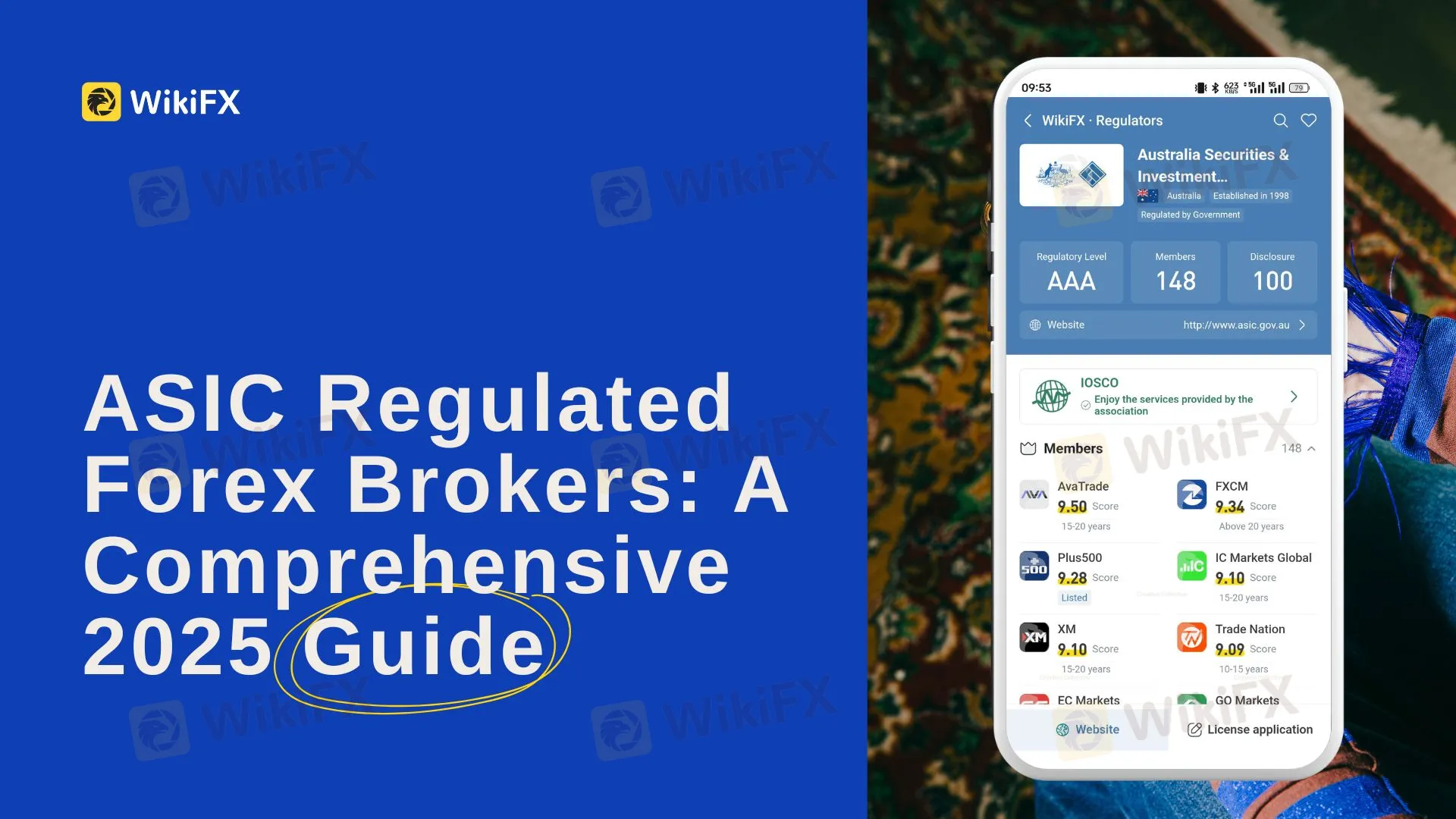
Abstract:Learn how ASIC regulated forex brokers protect traders through strict rules, licence verification, and why they’re trusted by global investors.
In the fast-paced world of forex trading, selecting a trustworthy broker is a decision that directly impacts the safety of your capital. Regulation is the single most important safeguard against fraud, mismanagement, and operational malpractice. In Australia, that responsibility lies with the Australian Securities and Investments Commission (ASIC)— a regulator with a global reputation for strict oversight and investor protection.
 Contents
Understanding ASIC Regulation
An ASIC regulated forex broker operates under the Australian Financial Services (AFS) Licence. This licence is not just a formality; it comes with a series of legal obligations designed to protect traders. Brokers must hold a minimum level of capital reserves to ensure financial stability and must keep client funds in segregated trust accounts, separate from the companys operational money. This prevents brokers from using client deposits to cover business expenses or trading activities.
Transparency is another cornerstone of ASIC regulation. Brokers are required to disclose trading conditions — including spreads, commissions, and leverage — clearly and accurately. Marketing materials must not mislead traders, and any claims made in advertisements must be verifiable. Since March 2021, ASIC has enforced leverage caps of 1:30 for major forex pairs and lower ratios for minors and other CFD products. These rules aim to limit the potential for catastrophic losses among retail clients, particularly new traders.
The ASIC Licensing Process
Gaining ASIC authorisation is a rigorous process. Prospective brokers must submit detailed business plans, operational procedures, risk management frameworks, and compliance strategies. The application also requires proof of financial solvency, including audited statements that meet ASICs capital adequacy standards.
Once the licence is granted, the broker is subject to continuous monitoring. ASIC can demand periodic reports, conduct unannounced inspections, and review how the broker handles complaints. Any breach of these requirements can result in fines, suspension, or the complete revocation of the licence.
Common Violations and ASICs Enforcement Actions
Over the years, ASIC has acted decisively against brokers that failed to meet its standards. Typical violations include:
- Misleading advertising regarding spreads or leverage
- Failure to segregate client funds
- Offering products to clients in jurisdictions where the broker is not authorised
- Inadequate disclosure of fees or risks
When breaches occur, ASIC can issue public warnings, impose financial penalties, or revoke licences entirely. These enforcement actions serve as both a penalty for the offending broker and a warning to the rest of the industry.
Why European Traders Choose ASIC Regulated Brokers
Although ASIC is an Australian regulator, its reputation extends well beyond its national borders. Many European traders actively seek out ASIC regulated forex brokers for several reasons. First, ASIC‘s capital requirements are among the highest in the industry, which significantly reduces the risk of broker insolvency. Second, ASIC’s enforcement record shows that it is willing to take action against misconduct, offering an additional layer of confidence for traders.
Another advantage is that many ASIC-regulated brokers hold multiple licences, such as from the UK‘s Financial Conduct Authority (FCA) or the Cyprus Securities and Exchange Commission (CySEC). This multi-jurisdictional regulation means European traders can enjoy both ASIC’s protections and the benefits of trading under EU or UK rules.
How to Verify an ASIC Licence
In an era where unlicensed brokers often make false claims about their regulatory status, verifying a broker‘s credentials is critical. ASIC maintains an official Professional Registers database where traders can search by the broker’s legal entity name or AFS licence number. The listing will confirm whether the licence is active, suspended, or revoked, and will display the registered company name.
However, the process can be time-consuming for those unfamiliar with ASIC‘s system. A faster option is to use independent verification tools such as WikiFX, which compiles updated global broker licence information — including ASIC-licensed entities — in one place. On WikiFX, you can confirm a broker’s regulation, see its compliance record, and compare it with other regulated firms.
Making the Right Choice
When selecting an ASIC regulated broker, focus on more than just the fact that it holds a licence. Assess its trading platforms, range of instruments, execution speed, and customer service quality. Determine whether the broker offers platforms like MetaTrader 4 or 5, or proprietary systems that might better suit your strategy. Look at spreads and commissions in real market conditions, not just whats advertised.
Finally, verify the brokers reputation by reviewing independent assessments and trader feedback. Doing this, alongside confirming its ASIC licence via WikiFX, will give you a clear, unbiased view before you invest any capital.