


Why Most Retail Traders Fail: What the Numbers Reveal
Retail trading data shows why so many traders quit or lose money, from short survival periods and high costs to overconfidence, emotional decisions, and poor risk control.
Original

简体中文
繁體中文
English
Pусский
日本語
ภาษาไทย
Tiếng Việt
Bahasa Indonesia
Español
हिन्दी
Filippiiniläinen
Français
Deutsch
Português
Türkçe
한국어
العربية
اردو




Abstract:A demo account teaches you the mechanics. A live account teaches you the psychology. You need to master both to survive in this game.

Let‘s be honest. We’ve all been there.
You download a trading app. You open a demo account loaded with $100,000 of fake cash. Within two weeks, you‘ve doubled it. You feel like a genius. You think you’ve cracked the code. You start calculating how soon you can quit your day job and buy that Lamborghini.
Then, you deposit $1,000 of your hard-earned savings into a live account.
And its gone in three days.
What happened? The charts looked the same. The strategy was the same. The currency pair was the same. So why did the result flip from massive profit to a painful loss?
Its because you fell into the “Paper Tiger” trap. Here is the cold, hard truth about the difference between demo and live trading that most gurus won't tell you.
The biggest difference isn‘t in the software; it’s inside your head.
When you trade on a demo account, you are playing a video game. If you lose $5,000 on a dummy trade, your pulse doesn't change. You don't lose sleep. You don't have to explain to your spouse why the savings account is empty.
Because there is no risk, there is no fear. And without fear, you trade logically. You hold winning trades longer because you don't care if they pull back. You cut losing trades quickly because your ego isn't attached to the money.
Real money has weight.
The moment you switch to a live account, simple biology takes over. When a trade goes slightly red, your heart rate spikes. You panic and close the trade too early just to stop the pain. Or worse, you hold onto a loser, praying it turns around because you can't bear to admit you lost real cash.
On a demo, you are a sniper. On a live account, you are a nervous wreck. That emotional gap is where 90% of traders fail.
Beyond your emotions, there is a technical reality check you need to understand.
In a demo environment, your trades are usually executed instantly at the exact price you see on the screen. The server acts as if there is infinite liquidity. You want to buy at 1.0500? Done.
The live market is dirty.
In the real world, you are competing with banks, hedge funds, and algorithms.
This is often where novice traders get suspicious. They think the broker is cheating them because the execution feels “slower” or “worse” than the demo. While slippage is a normal part of trading, some brokers do manipulate live feeds to hunt your stop losses.
This is where you need to be smart. Before you move from demo to live, look up your broker on WikiFX. Check their regulation score. If you are dealing with an unregulated bucket shop, that “slippage” you are experiencing might actually be the broker rigging the game against you. Never trust a broker with your deposit until you've verified they are legitimate.
Think about how you treat a demo account. If you blow the account up—meaning you lose everything—what do you do? You hit the “Reset” button. The balance goes back to $100,000, and you try again.
You develop bad habits. You take massive risks because you know there is a safety net.
In the live market, there is no reset button. If you blow your account, that money is gone forever. You have to work, save, and deposit again. This creates a psychological pressure called “scarcity mindset.” You become afraid to pull the trigger on good trades because you are terrified of losing the money you can't replace.
So, is the demo account useless? Absolutely not. It is fantastic for learning how to use the platform and testing if a strategy has an edge.
But don't confuse being a good “demo trader” with being a profitable trader.
Here is my advice for making the jump:
A demo account teaches you the mechanics. A live account teaches you the psychology. You need to master both to survive in this game.
Stay sharp, keep your emotions in check, and always verify who you are trading with.
Disclaimer: This article is for educational purposes only and does not constitute financial advice. Trading carries a high level of risk, and you can lose more than your initial deposit.
Disclaimer:
The views in this article only represent the author's personal views, and do not constitute investment advice on this platform. This platform does not guarantee the accuracy, completeness and timeliness of the information in the article, and will not be liable for any loss caused by the use of or reliance on the information in the article.

Retail trading data shows why so many traders quit or lose money, from short survival periods and high costs to overconfidence, emotional decisions, and poor risk control.

The market is a game of psychology, not just economics. Trade what the chart is doing, not what the news anchor is saying.

I see it every single day. A student sends me a screenshot of their trading setup, asking why they got stopped out.
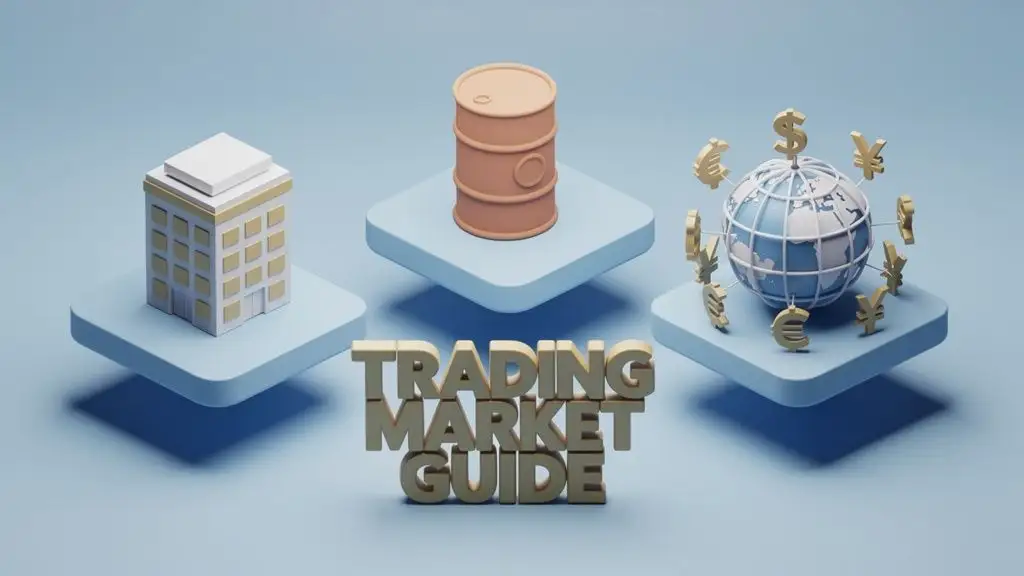
You’ve probably seen the screenshots on social media. Someone turns $500 into $5,000 in a single morning, and suddenly everyone wants to be a trader. But here is the cold reality: trading isn’t a single game. It’s a collection of different battlefields, and if you bring a knife to a gunfight, you’re going to lose your capital.
WikiFXWikiFXWikiFXWikiFXWikiFXWikiFXWikiFXWikiFXWikiFXWikiFX