

Global Broker Regulation Inquiry App
About WikiFX
English
简体中文
繁體中文
English
Pусский
日本語
ภาษาไทย
Tiếng Việt
Bahasa Indonesia
Español
हिन्दी
Filippiiniläinen
Français
Deutsch
Português
Türkçe
한국어
العربية
اردو


Trump Risks Inflationary Déjà Vu with Stimulus Push Amid Robust Growth

WikiFX
|


Abstract:Markets are bracing for a potential collision between fiscal expansion and monetary reality as President Trump advocates for aggressive stimulus measures despite a backdrop of robust economic growth.
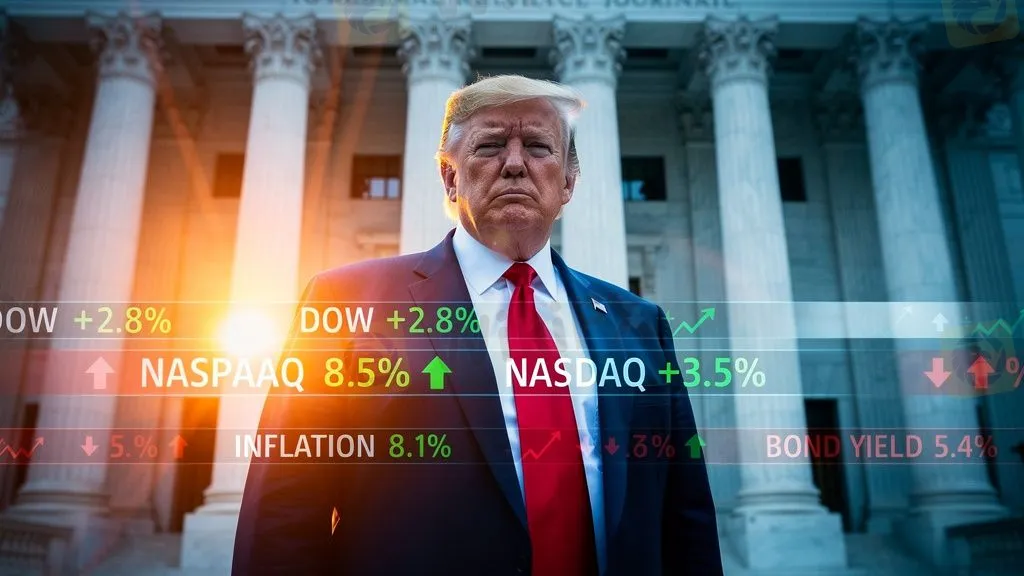
Markets are bracing for a potential collision between fiscal expansion and monetary reality as President Trump advocates for aggressive stimulus measures despite a backdrop of robust economic growth.
Stimulus in a Hot Economy
Echoing the early days of the Biden administration, Trump is pushing for a fresh round of economic injections, including $2,000 direct checks to Americans and calls for lower interest rates. This comes despite US GDP expanding at an annualized rate of 4.3% in the summer—a sharp contrast to the pandemic-recovery era that justified previous mass payouts.
Economic orthodox suggests that stimulus during high-growth periods risks overheating the economy. Critics argue that replicating the “Biden-style” fiscal injections of 2021 could re-ignite the inflationary pressures that saw CPI hit 40-year highs in 2022.
The 'Trump Rules' Pressure the Fed
In a challenge to Federal Reserve independence, Trump has outlined what he terms “Trump Rules,” advocating for a Fed Chair who would cut rates when equity markets are rallying to sustain momentum. This contradicts the traditional central bank mandate of hiking rates to cool an overheating economy.
“I want a Fed Chair who cuts when the market is good, not one who wrecks it for no reason,” Trump stated, claiming a buoyant stock market could unrealistically boost economic growth by up to 20%.
Inflationary Headwinds
The combination of demand-side stimulus and potential rate cuts creates a classic inflationary setup: boosting disposable income while easing borrowing costs creates excess demand against fixed supply.
Federal Reserve Chair Jerome Powell recently noted that tariffs remain a contributing factor to inflation holding above the 2% target, with November CPI printing at 2.7%. While markets currently expect the Fed to hold rates steady until mid-2026 to support the labor market, a new wave of fiscal stimulus could force a hawkish pivot, driving Treasury yields higher and adding volatility to the Greenback.
Disclaimer:
The views in this article only represent the author's personal views, and do not constitute investment advice on this platform. This platform does not guarantee the accuracy, completeness and timeliness of the information in the article, and will not be liable for any loss caused by the use of or reliance on the information in the article.
WikiFX Broker
Latest News
Japanese Yen dips further despite hotter inflation, upbeat employment data
WikiFXUSDCHF: Rising Channel Continuation Toward the Target Zone
WikiFXPoland: Growth supported by investment rebound – ING
WikiFXBreaking: Nonfarm Payrolls benchmark revision to lower US employment by 79,000 through March 2026
WikiFXMexican Peso tumbles as Warsh embarks on inflation fight
WikiFXSouth Korean Won: BoK tightening supports KRW against US Dollar – Commerzbank
WikiFXSilver Price Forecast: False breakout and hawkish Fed sink XAG
WikiFXOEXN Broker Review: Regulated but is it Safe for Traders?
WikiFXDow Jones Industrial Average round-trips a Fed that promised nothing
WikiFXMalaysian Ringgit: BNM seen on steady policy path – DBS
WikiFX