





Moneta Markets Receives UAE Category 5 Licence
Moneta Global Financial Services LLC has received a Category 5 licence from the UAE Capital Market Authority, establishing a regulated structure for the company’s activities in the country.
Original

简体中文
繁體中文
English
Pусский
日本語
ภาษาไทย
Tiếng Việt
Bahasa Indonesia
Español
हिन्दी
Filippiiniläinen
Français
Deutsch
Português
Türkçe
한국어
العربية
اردو




Abstract:The rupee, which has been falling against major global currencies, including the US dollar, is finally back on the path to recovery. As per the initial trade, the rupee touched a six-week high of 94.43 against the USD on June 17, 2026, tracking a plunge in crude oil prices following the interim peace deal agreed upon between the United States of America and Iran. Brent crude oil price slipped to around $78 per barrel, which has not been the case for three straight months following the war. The surging crude oil prices further caused pressure on the rupee, which was already falling apart.
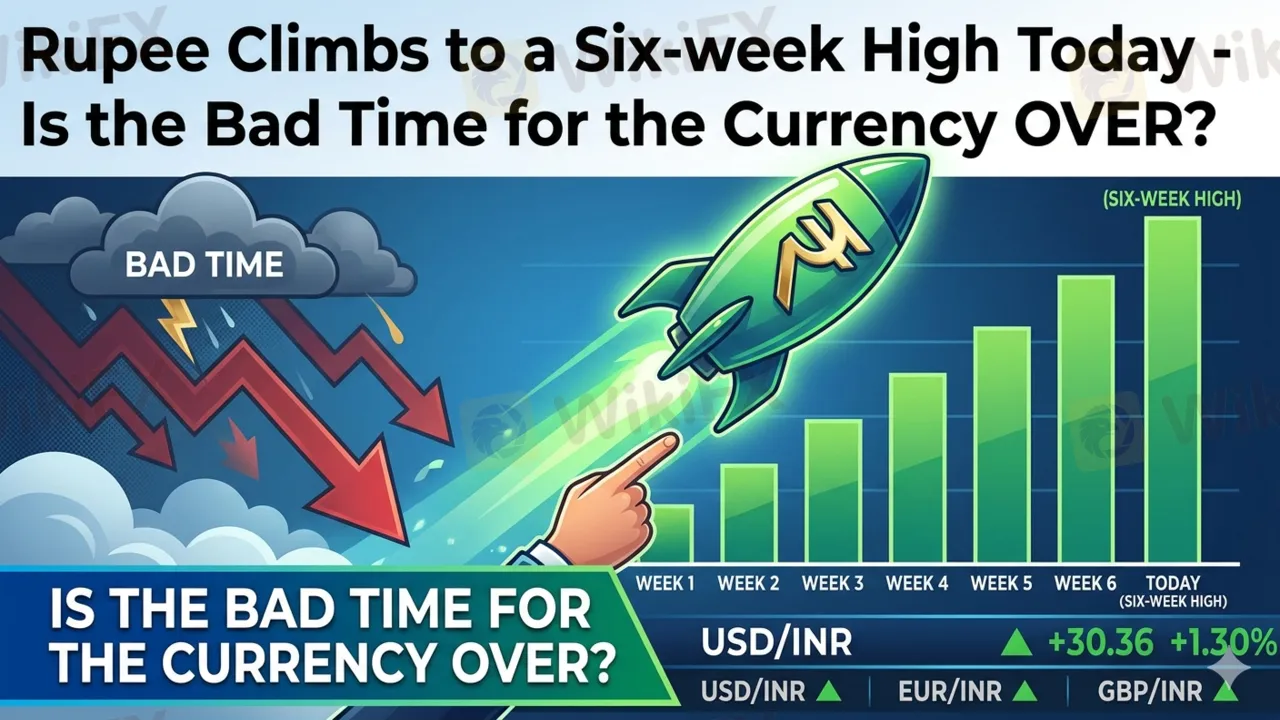
The rupee, which has been falling against major global currencies, including the US dollar, is finally back on the path to recovery. As per the initial trade, the rupee touched a six-week high of 94.43 against the USD on June 17, 2026, tracking a plunge in crude oil prices following the interim peace deal agreed upon between the United States of America and Iran. Brent crude oil price slipped to around $78 per barrel, which has not been the case for three straight months following the war. The surging crude oil prices further caused pressure on the rupee, which was already falling apart.
 Contents
Yes, you heard it right! The continuous fall in crude oil prices is largely seen as a major headwind leaving India, the worlds third-largest oil importing nation globally. Brent crude price fell 0.32% to $78.61 per barrel, which is as far as it has been three months ago in the first week of March 2026. This further accounts for less than 10% above the levels witnessed before the conflict began between the US & Israel combined and Iran. The rupee is recovering fast owing to the positive investor sentiment, aided by the reportedly agreed peace deal, which includes the reopening of the Strait of Hormuz for the smooth passage of oil and gas to countries, including India.
Yes, crude oil prices have been a significant boost to not only curb the further fall but also have been instrumental in ensuring an upward movement for the rupee against the USD. However, in hindsight, the Reserve Bank of India (RBI) played its part too by bringing a series of stimulus measures to attract dollar inflows to the country and boost the rupee concurrently.
The removal of tax investments in Indian bonds, as part of the RBIs corrective measures, is already having its positive effect on the rupee. India has recorded over $2 billion worth of investments into domestic bonds by overseas investors over the last eight sessions.
At the same time, average daily equity outflows from India have also reduced to INR 22.6 billion following the announcement. This is a drastically improved figure compared to INR 45.12 billion from the start of the Middle East conflict to June 5.
Above, we saw a moderation in the FII outflows that supported the rupee. The outflow was seen as a chief reason for the continuous fall in the rupee against the USD. But why were FIIs leaving India, touted as one of the worlds fastest growing economies? Multiple factors weighed in on the decision of FIIs to leave Indian markets.
The world is shifting greatly towards accelerated adoption of Artificial Intelligence (AI) and capital expenditure (capex) themes, making markets such as Taiwan and Korea, a sought-after destination for global investors.
Historically speaking, Indian stock indices, including the Nifty 50, have traded at a premium, making them seem overvalued compared to similar-looking emerging economies.
The Indian rupee, which has declined from 85 to 95 in a span of one year, reduces returns for foreign investors when looking to convert their local gains back into major currencies such as the USD.
Rising inflation and high oil prices due to the West Asia conflict widened the current account deficit and prompted central banks to keep interest rates elevated, dampening corporate earnings.
The rupee‘s rise to a six-week high marks a welcome turnaround after months of pressure from soaring oil prices, foreign fund outflows, and geopolitical uncertainty. The recent decline in crude oil prices following the US-Iran peace agreement has provided immediate relief to India’s import bill, while RBI measures aimed at attracting foreign capital have further strengthened the currencys recovery. Encouragingly, bond inflows have increased and FII outflows have moderated, signaling improving investor confidence in the Indian economy.
However, declaring the end of the rupee‘s troubles may be premature. Global capital continues to chase opportunities in technology-driven markets, valuation concerns persist, and currency fluctuations remain a key consideration for foreign investors. The rupee’s future trajectory will depend not only on stable oil prices and sustained foreign inflows but also on broader global economic conditions and domestic growth momentum.
For now, the currency appears to have found a firmer footing, but maintaining this strength will require continued policy support, favorable geopolitical developments, and a sustained return of investor confidence to Indian markets.
Download the WikiFX app for the latest financial updates, including forex broker investigation reports.

Interesting Articles for You
Disclaimer:
The views in this article only represent the author's personal views, and do not constitute investment advice on this platform. This platform does not guarantee the accuracy, completeness and timeliness of the information in the article, and will not be liable for any loss caused by the use of or reliance on the information in the article.

Moneta Global Financial Services LLC has received a Category 5 licence from the UAE Capital Market Authority, establishing a regulated structure for the company’s activities in the country.

Did LMAX Group deny you withdrawals citing frozen funds at the wallet service provider’s end? Have you been so exhausted by the endless withdrawal hassles that you have begun to stop investing in the platform? Has this UK-based liquidity provider even questioned your fund ownership status when you requested withdrawals? You are not alone! Many users have complained about these issues while sharing their LMAX Group reviews.

A fresh Pune police probe has reportedly booked 57 people in connection with an alleged forex investment scam involving a trading platform. This India-focused report separates the allegation from confirmed regulatory rules, explains how fake trading app scams use social media, fabricated profits, third-party bank accounts and blocked withdrawals, and shows how investors can verify an online forex trading platform through RBI and SEBI resources. It also places the case within Pune's wider pattern of online investment fraud and provides an immediate response checklist, including the National Cyber Crime Reporting Portal and helpline 1930.

A TickTrader white label can look like the fastest route to a modern branded trading environment, but a fast launch is not the same as a controlled launch. This 2026 broker guide explains what the TickTrader platform is, where a Soft-FX broker solution can sit in a wider operating stack, and how to evaluate the difference between a white label, a server licence, and a connected CRM or Client Office setup. It also unpacks TickTrader cost beyond the monthly headline, including implementation, integration, support, data, governance, migration, and exit assumptions. Use the practical questions, workflow tests, comparison table, and launch checklist to assess a Soft-FX TickTrader provider without mistaking a feature demo for evidence that your brokerage can run the service safely at scale.
WikiFXWikiFXWikiFXWikiFXWikiFXWikiFXWikiFXWikiFXWikiFXWikiFX